
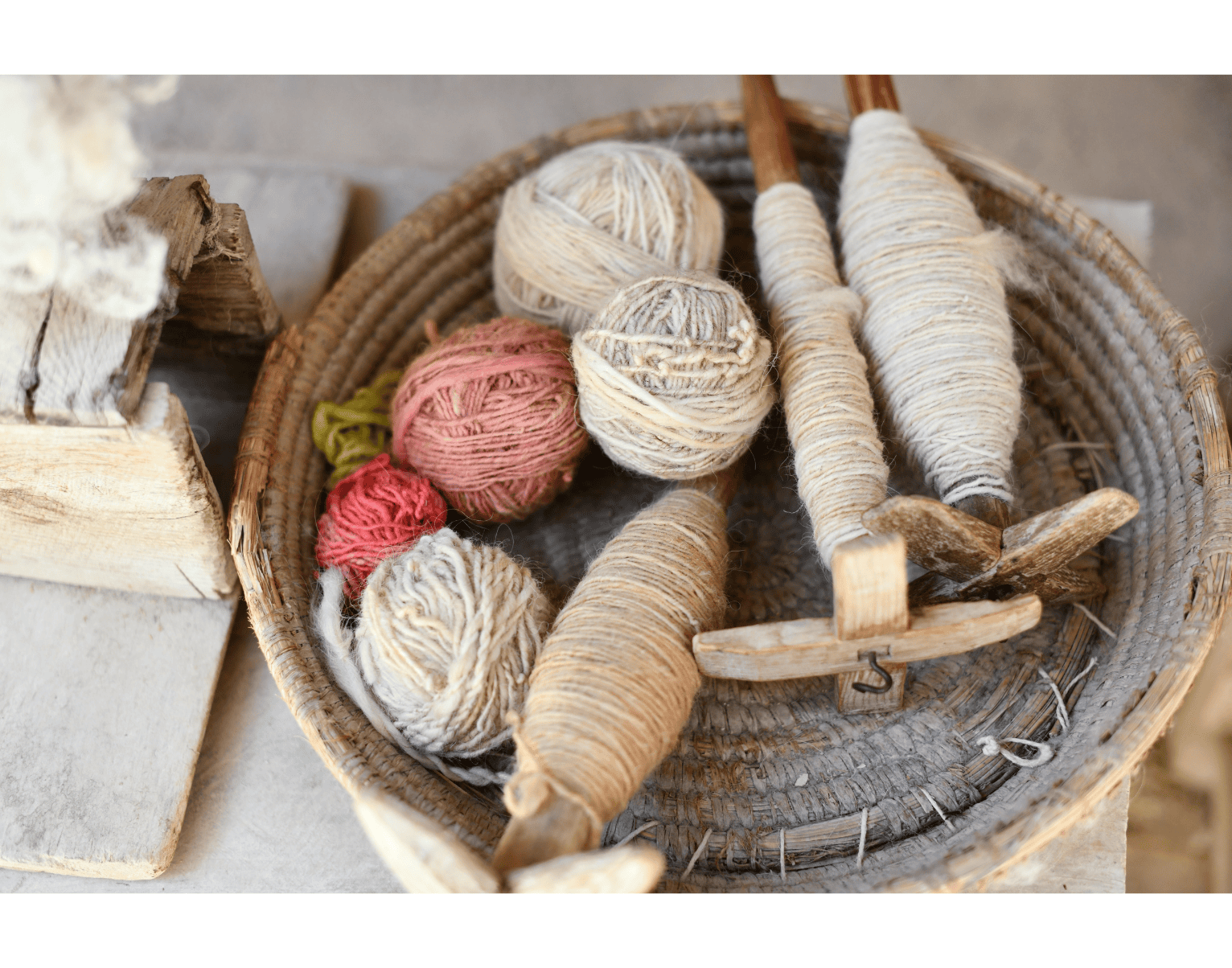
A handmade rug can take months, sometimes years, to complete before it ever reaches a living room. Its price reflects far more than the fibers beneath your feet. For anyone asking, “why are handmade rugs expensive?”, the answer begins with human time, but it also includes material quality, regional knowledge, age, condition, and the singular presence a well-chosen textile brings to a room.
A machine-made rug is designed for repetition. A handmade rug is made knot by knot, line by line, by a weaver whose hands determine its texture, movement, and subtle irregularities. Those nuances are not flaws. They are part of what gives an antique Persian, Turkish Oushak, or vintage Sultanabad rug its quiet character and lasting appeal.
Why Are Handmade Rugs Expensive? The Work Is in Every Inch
Hand-knotting is an exacting, patient process. Depending on its size, knot count, pattern complexity, and the number of weavers involved, a rug may require hundreds of thousands or even millions of individual knots. A finer weave allows for more detailed motifs and a more precise drawing, but it also demands considerably more labor.
Even rugs with an open, painterly field – such as many Oushaks – require deep technical fluency. The weaver must maintain tension, proportion, color placement, and structure across the entire piece. A small variation in wool, dye absorption, or hand pressure can alter the finished surface. This is why handmade rugs have dimension that printed and power-loomed alternatives often struggle to replicate.
Labor costs vary by weaving region, and not every handwoven rug is priced in the same way. A contemporary rug woven with a simpler construction may be more accessible than a finely knotted antique Persian piece. Still, the fundamental difference remains: the cost is tied to skilled work that cannot be hurried without changing the result.
Natural Materials Age With Grace
The best handmade rugs are often made from wool, cotton, silk, or a thoughtful combination of natural fibers. These materials affect both the initial cost and the way a rug lives in a home.
Wool is prized for good reason. It has a natural resilience that helps it spring back after furniture placement, and its lanolin content offers a degree of natural stain resistance. Quality wool also develops a soft, low luster over time rather than looking flat or synthetic. Cotton is commonly used in foundations, providing structure beneath the wool pile. Silk may be used for fine details or luminous highlights, though it calls for more careful placement and care.
Material alone is not a guarantee of quality. The length and preparation of the wool, the strength of the foundation, and the finishing all matter. A well-made rug should feel balanced: supple enough to lie beautifully on the floor, yet structurally sound enough to endure daily use.
Synthetic rugs have their place, particularly in highly temporary or high-risk settings. But they do not generally offer the same depth, repairability, or patina as a natural-fiber piece. With a handmade rug, the material is part of the long view.
Color Is a Craft, Not Just a Palette
Color is often the first thing that draws someone to a rug, particularly when it is meant to anchor a layered interior. Yet the most compelling color stories rarely come from a single uniform shade. They come from variation.
In older rugs, natural dyes and time create abrash – gentle shifts in color across a field or border. A faded indigo may move from deep blue to a softened mineral tone. Madder reds can settle into warm rose, brick, or terracotta. These changes give a rug visual depth and allow it to sit comfortably alongside antique wood, contemporary upholstery, plaster walls, and collected art.
Achieving nuanced color requires knowledge of dyeing, fiber preparation, and regional tradition. In vintage and antique pieces, age contributes another layer. Decades of use, sunlight, washing, and careful restoration can create a surface that cannot be manufactured on demand. That history is part of the value, especially for buyers looking for a piece with genuine warmth rather than a distressed effect.
Provenance and Rarity Shape Value
Not all handmade rugs are collectible, but certain regions, periods, designs, and conditions are more sought after than others. A rug’s provenance can influence its price because it helps explain where it was made, how it was constructed, and what visual tradition it belongs to.
For example, antique Persian rugs are often valued for their refined drawing, dense knotting, and longstanding design heritage. Turkish Oushaks are admired for their spacious motifs, generous scale, and softened palettes that work naturally in relaxed, design-forward rooms. Sultanabads may appeal for their decorative floral patterns and graceful, often room-defining proportions.
Rarity does not always mean a rug must be old or formal. It may mean an unusually beautiful palette, a difficult-to-find size, an exceptional allover design, or a piece that has survived in remarkably strong condition. One-of-a-kind rugs also resist the sameness of mass production. Once a particular vintage textile is sold, another may come close, but it will never be identical.
Condition Requires an Honest Eye
Age can add beauty, but it also introduces variables. An antique rug with a luminous surface and beautifully worn pile may be more desirable than a newer rug with no visual distinction. At the same time, condition affects value in practical ways.
Professionally restored areas, secure edges, stable foundations, and thoughtful cleaning can preserve a rug for years to come. Significant structural weakness, dry rot, extensive damage, or poorly executed repairs can reduce its value and limit where it should be used. This is one reason curation matters. Assessing a rug requires more than identifying its colors from a photograph. It means considering its construction, wear, repairs, proportions, and suitability for real life.
For a busy family room, a lower-pile vintage wool rug can be an excellent choice because it is forgiving and visually relaxed. For a formal dining room, a finer antique piece may be appropriate if chairs move easily across its surface and the rug is large enough to accommodate them. Expense should always be considered alongside placement, not apart from it.
The Price Includes Curation and Preparation
When purchasing a handmade rug from a knowledgeable retailer, the price often reflects work that happened long before the rug was photographed. Pieces must be sourced, evaluated, cleaned, repaired when appropriate, measured accurately, and presented with enough context for a buyer to make a confident decision.
This is particularly valuable in the vintage market, where inventory is varied and terminology can be inconsistent. A curated selection saves time and reduces the uncertainty of sorting through thousands of pieces with unclear condition or vague origins. At Eskici Rugs, that editorial point of view is central: each rug is chosen not simply as a floor covering, but as a textile with the presence to shape a room.
There is also a practical distinction between cost and value. A less expensive rug that must be replaced after a few years may cost more over time than a well-made wool rug that can be cleaned, repaired, and enjoyed for decades. A handmade rug is not indestructible, and it should not be treated as precious to the point of avoidance. It is meant to be lived with. But quality construction gives it a useful life beyond a single decorating cycle.
A Considered Purchase for a More Personal Home
The right handmade rug does more than fill an empty area of floor. It can establish scale in a living room, bring softness to a bedroom, and make a dining space feel grounded rather than assembled. Its colors often reveal themselves gradually, responding to daylight, neighboring fabrics, and the changing seasons of a home.
That is why price should be considered in proportion to the role the rug will play. If it is the piece that connects the room, outlasts a sofa, and becomes more familiar with age, craftsmanship becomes easier to see not as an extra, but as the foundation. Choose the piece whose texture, proportion, and history you want to live alongside, and let it make the room feel quietly, unmistakably your own.