
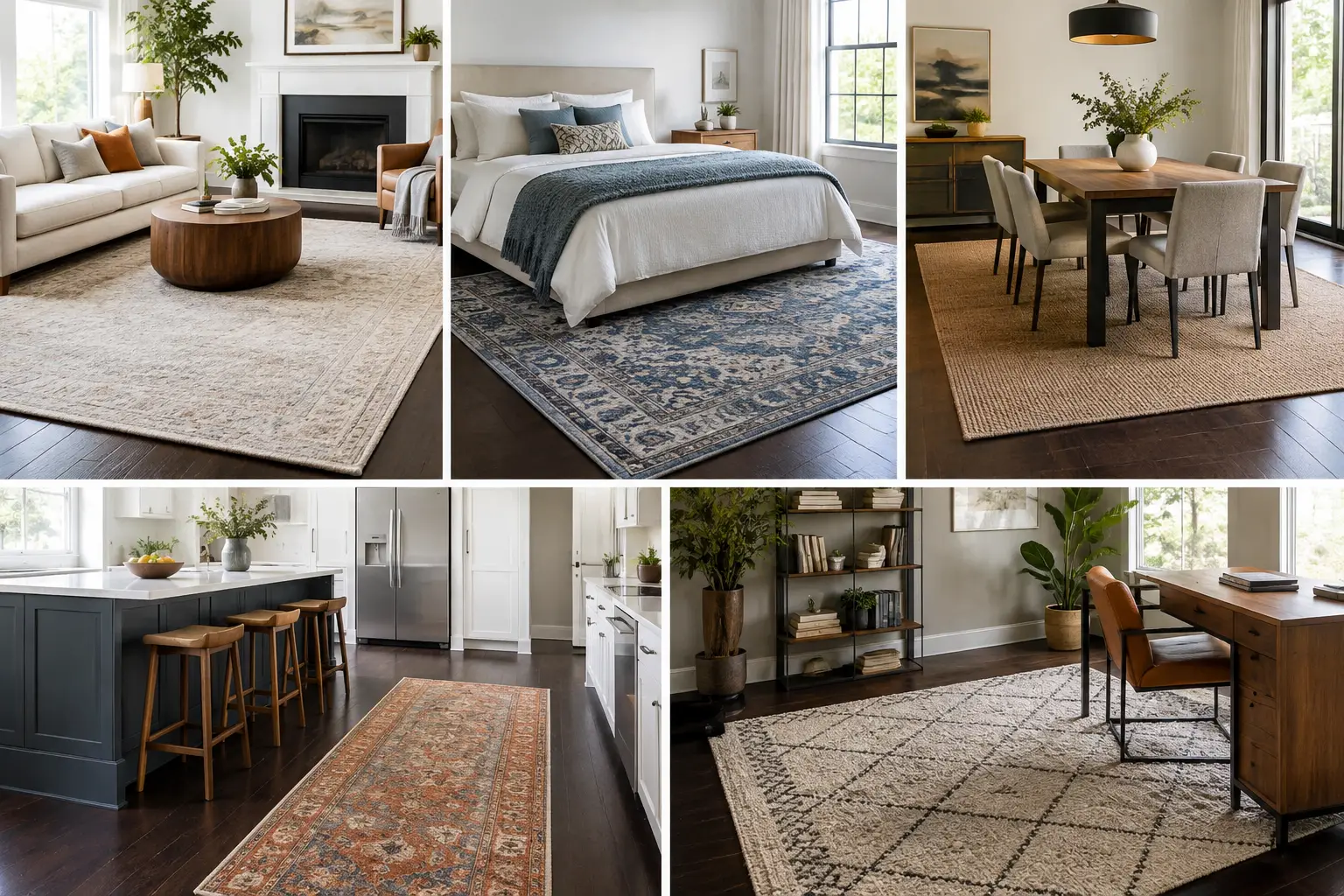
A dark walnut floor can make a room feel grounded before a single piece of furniture arrives. It can also make the wrong rug disappear, feel overly stark, or divide the room more than intended. Knowing how to choose rugs for dark floors is less about finding the palest possible design and more about creating a considered relationship between the floor, the textile, and the light in the room.
A handmade rug is especially well suited to this work. Its variation in tone, worn color, and natural texture can soften the density of espresso oak, stained pine, slate, or nearly black tile without making the room feel predictable. The goal is not contrast for its own sake. It is warmth, definition, and a floor that feels beautifully layered.
How to Choose Rugs for Dark Floors: Start With Contrast
First, decide how much visual separation the room needs. Dark floors are often mistaken for a neutral backdrop, but they carry considerable visual weight. A rug that is only slightly lighter may look rich and tonal in bright daylight, then blend into the floor once evening arrives. This can be lovely in a quiet bedroom or library, but it may leave a living room without enough shape.
For clear definition, choose a rug with a noticeably lighter field: soft ivory, sand, faded camel, oatmeal, muted blush, pale sage, or washed sky. These colors bring light upward from the floor and allow the rug’s pattern to be read from across the room. Antique Persian pieces with a softened cream ground, Turkish Oushaks in warm neutral palettes, and gently faded Sultanabads often create this balance with ease.
High contrast is not the only answer. In rooms with abundant natural light, a mid-tone rug in tobacco, terracotta, muted denim, or olive can sit beautifully over dark floors. The key is enough distinction in value. If both the floor and the rug are deep brown or charcoal, look for a pattern with lighter detail, an open border, or tonal variation that prevents the layers from merging.
Sample the rug where it will live
A rug’s color changes with its surroundings. Hold a sample, photograph, or rug image next to the flooring in daylight and at night with your usual lamps on. Dark floors often pull cooler or warmer depending on their finish, while handmade wool catches light differently than a flat printed surface.
Also consider the floor’s undertone. A red-brown mahogany floor is often best with rugs that acknowledge its warmth through ochre, rust, old rose, or cream. An espresso floor with a cooler cast can support stone, faded blue, charcoal, and silvery taupe. This is guidance, not a rule. A slightly unexpected color can be the element that gives a room its personality.
Let the Rug Bring Warmth, Not Just Brightness
A white or ivory rug can look striking on dark floors, but brightness alone does not guarantee warmth. In a room with crisp white walls, black-framed windows, and minimal furnishings, a very pale rug may push the scheme toward graphic contrast. That may be exactly right for the architecture, but it can also feel severe if the room needs softness.
Look for rugs with complexity in their palette. A cream field touched with walnut, saffron, faded coral, and soft gray will connect the dark floor to the rest of the room more gracefully than a flat solid color. Vintage rugs are particularly valuable here. Their naturally mellowed dyes tend to hold multiple notes at once, so they bridge rather than compete.
Pattern matters, too. Large, open motifs generally read calm and generous against dark flooring, especially in a room where the rug is intended to be a focal point. A finely detailed Persian design offers another effect: it draws the eye inward and adds intimacy, making a broad expanse of dark floor feel less formal. Neither approach is inherently better. Consider whether the room needs a quiet foundation or a piece with more visual conversation.
Choose a Size That Interrupts the Dark Floor Thoughtfully
With dark flooring, size becomes even more visible. A small rug placed in the center of a large room can make the surrounding floor appear heavier and more expansive. It may feel like a decorative accent rather than an element that anchors the furniture.
In a living room, the most assured arrangement usually places at least the front legs of sofas and chairs on the rug. A larger rug that holds the full seating group is often more generous still, particularly when the floor is very dark. The rug becomes a warm field within the room instead of a small island surrounded by contrast.
For dining rooms, allow enough room for chairs to remain on the rug when pulled back from the table. This is a practical requirement, but it also matters visually: a properly scaled rug makes the dining area feel intentional against a deep floor. In bedrooms, extend the rug beyond both sides and the foot of the bed, or use runners that give the first step of the morning a softer landing.
Hallways and entries deserve the same consideration. A narrow vintage runner can bring movement and color to a dark corridor, but leave a consistent reveal of flooring along each side. That margin keeps the space from feeling crowded and lets the rug’s craftsmanship register clearly.
Use Texture to Change the Mood of the Room
Dark floors can be polished, reflective, and occasionally a little formal. Texture is what keeps the room from becoming too hard or uniform. A hand-knotted wool rug adds a gentle irregularity that makes wood, stone, and tile feel more lived in. Pile height, weave structure, and age all affect the result.
A low-pile antique rug is often ideal under dining tables and in active rooms because it offers pattern and patina without excessive bulk. In a bedroom or sitting room, a slightly fuller wool rug can bring a more enveloping quality. Flatweaves work well when you want a relaxed, architectural look, though they benefit from a rug pad to help them stay in place and feel substantial underfoot.
Do not overlook the visual texture of the rug itself. A faded Oushak with softly articulated motifs can lighten a dark room without introducing sharp contrast. A more densely patterned Heriz or Persian rug can make an expansive floor feel collected and established. These choices affect not only color but also the room’s pace.
Balance the Rug With What Sits Around It
The rug should not be asked to solve every design question alone. If you choose a dark, moody rug over dark floors, introduce lighter upholstery, pale linen drapery, or a warm wall color so the room retains dimension. If you select a light rug, repeat one or two of its deeper tones in wood furniture, pillows, or art to keep it connected to the floor.
Furniture legs are worth noticing. Delicate black metal legs may visually disappear against an ebony floor, while oak, walnut, brass, or upholstered bases can provide more contrast. In rooms with a great deal of dark wood, a rug with a light field and traces of brown often creates continuity without making every surface match.
This is also where one-of-a-kind rugs earn their place. A handmade piece can carry the old rose, indigo, tobacco, and cream that a layered room needs, bringing together finishes that would otherwise feel unrelated. Its character makes the scheme feel assembled over time rather than purchased all at once.
Avoid the Most Common Missteps
The first misstep is choosing by color alone. A pale rug may be technically right against dark flooring but still feel too small, too cool, or too pristine for the room. Consider its scale, material, pattern, and the amount of natural light before making a decision.
The second is matching dark brown to dark brown without enough contrast in texture or motif. A deep rug can be sophisticated over a deep floor, especially in a moody study or formal dining room, but it needs visible movement. Look for faded highlights, a lighter border, or a design with enough variation to remain legible.
Finally, avoid treating a vintage rug’s age as a flaw. Gentle wear, softened color, and slight irregularity are often the qualities that make it so successful on dark floors. They take the edge off the floor’s density and introduce the sense of history that gives an interior lasting warmth.
When the floor is dark, the right rug does more than cover it. It gives the room a center of gravity, catches the light in unexpected ways, and makes every surrounding material feel more considered. Choose the piece that brings that quiet character forward, and let the dark floor do what it does best: make everything above it feel more luminous.