
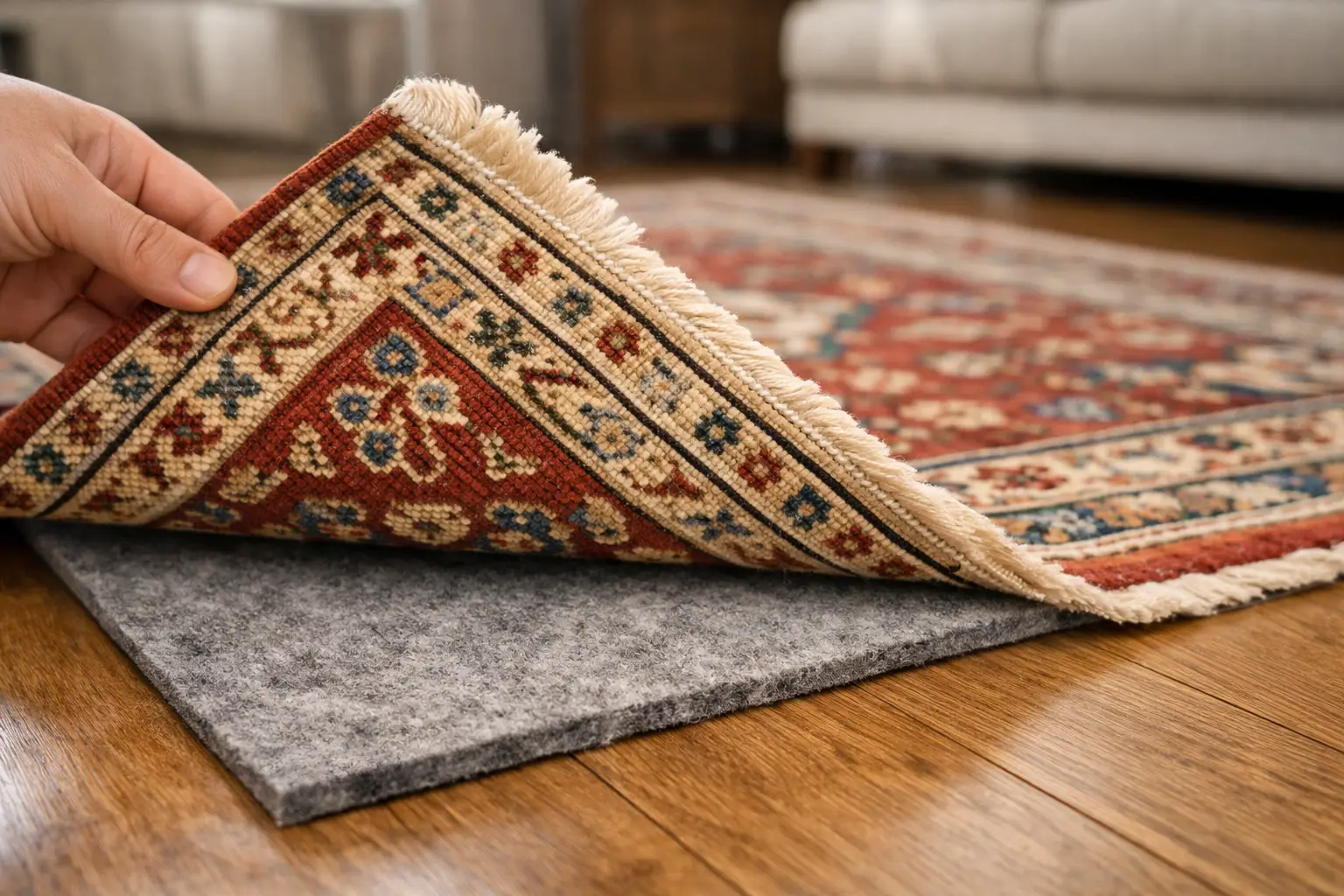
A handmade rug should feel settled in a room, not slightly adrift. The right rug pads give an antique Persian, softly faded Oushak, or richly textured vintage runner the quiet foundation it needs: a more secure grip, a gentler step, and a better chance of aging gracefully on the floor beneath it.
Often treated as an afterthought, a pad is part of the installation. It affects how a rug wears, how it feels underfoot, and whether its edges stay flat and composed. For a one-of-a-kind textile chosen for its history and character, that modest layer is a practical form of care.
Why Rug Pads Matter for Handmade Rugs
A rug pad does several jobs at once. First, it reduces movement. This matters in an active living room, beneath dining chairs, or along a hallway where a runner is subject to daily traffic. A rug that shifts can become a tripping concern, but it also experiences unnecessary stress at its corners and along its foundation.
Second, a pad introduces a slight cushion between rug and floor. That separation helps absorb impact rather than allowing every footfall, chair leg, or dropped object to transfer directly through the rug. With hand-knotted and handwoven pieces, whose wool pile and structural foundation have been made by hand, reducing friction is a sensible long-term measure.
Finally, a good pad makes the room feel better. It adds a subtle softness beneath a flatwoven kilim, gives a low-pile antique rug more presence, and helps a substantial wool carpet feel even more inviting. The effect should not be spongy or conspicuous. It should simply make the rug feel as though it belongs there.
Choosing Rug Pads by Floor Type
The floor beneath the rug should guide the decision. There is no single pad that is ideal for every surface, and choosing by habit rather than material can create avoidable problems.
Hardwood and finished wood floors
For sealed hardwood, engineered wood, and other finished hard surfaces, look for a pad specifically labeled safe for those finishes. Natural rubber or quality felt-and-rubber pads are often a considered choice because they combine grip with a protective layer of cushion. Avoid inexpensive PVC or plasticized pads unless the manufacturer clearly confirms they are safe for your particular finish. Some materials can discolor, adhere to, or react with floor coatings over time.
Felt-and-rubber pads are especially useful under larger living room and dining room rugs. The felt side offers cushioning and helps the rug sit with more substance, while the rubber side holds it in place. A thin rubber-only option can work under a smaller rug or runner where low profile and traction matter more than softness.
Even with a floor-safe pad, lift the rug occasionally when cleaning. This gives the floor a chance to breathe and allows you to inspect for moisture, grit, or any unexpected transfer.
Stone, tile, concrete, and luxury vinyl
Hard, smooth surfaces generally benefit from a non-slip pad with a little density. Tile and stone can make even a thick wool rug feel firmer than expected, so a felt-and-rubber construction often adds welcome comfort without changing the rug’s appearance.
For luxury vinyl plank, follow the flooring maker’s care guidance before selecting a pad. Vinyl finishes vary, and some may be sensitive to rubber, latex, or certain plasticizers. A barrier-approved pad may be the appropriate choice. The goal is always the same: keep the rug stable without compromising the finish underneath.
Wall-to-wall carpet
A rug placed over broadloom carpet needs a different approach. Here, the concern is less about scratching a floor and more about preventing the area rug from creeping, wrinkling, or buckling over the carpet pile. A firm rug-to-carpet pad, often with a felted surface designed to grip both layers, can help keep the composition orderly.
Avoid overly thick padding in this setting. Too much loft can make furniture unstable and may create an awkward raised edge, particularly with a vintage rug that already has a substantial weave.
Thickness: Comfort Without Distortion
A thicker pad is not automatically better. The right thickness depends on the rug, the furniture it supports, and the way the room is used.
For a large antique carpet in a sitting room, a pad around one-quarter inch can offer a pleasing degree of resilience. It lends comfort while keeping sofas, tables, and occasional chairs on steady footing. A dining room often calls for a thinner profile, especially if chairs need to move easily over the rug’s edge. Under a hallway runner, low-profile grip is usually more useful than extra cushion.
Flatweaves deserve particular consideration. A vintage Turkish kilim, dhurrie, or other low-pile weave can benefit from felt beneath it, but too much thickness may alter its crisp, tailored character. The pad should support the textile rather than make it feel inflated.
Also consider doors, transitions, and furniture. Measure the clearance beneath nearby doors before committing to a thick pad. In rooms with heavy case goods or a bed frame resting partly on the rug, choose a dense pad that will not compress quickly into uneven hollows.
Size and Placement Make a Difference
A rug pad should be slightly smaller than the rug itself, typically by about one inch on every side. That means a pad for an 8-by-10 rug should generally measure around 7 feet 10 inches by 9 feet 10 inches. Keeping the pad inset prevents it from showing at the edges and lets the rug taper naturally to the floor.
For irregularly shaped rugs, stairs, or narrow runners, a pad can be trimmed carefully to fit. Measure twice, mark the cut line, and work gradually. The finished pad should support the rug evenly, including its corners, without extending beyond the textile.
Do not use several small pad pieces beneath one large rug if you can avoid it. Gaps may create visible lines, uneven wear, or a subtle change in feel beneath the surface. One properly sized piece is cleaner, more stable, and easier to maintain.
What to Avoid
The least expensive rug pads can be tempting, particularly when the rug itself has been a considered investment. Yet a poor pad can leave residue, flatten prematurely, create odor, or fail to prevent movement. It can also make a carefully selected rug feel less refined than it should.
Be cautious with adhesive tapes, particularly on wood floors and delicate textile foundations. They may offer a quick fix for a lifting corner, but their removal can be troublesome and they do not address the broader need for even support. If a rug continues to curl or buckle despite a proper pad, it may need time to relax, a gentle professional assessment, or attention to humidity and storage history.
Moisture is another reason to be thoughtful. Never place a pad beneath a rug on a damp floor, and avoid using one in areas where water regularly collects. Entry rugs can certainly be practical, but they should be lifted and aired periodically, especially in wet seasons.
A Small Detail With a Lasting Effect
A rug pad is not meant to compete with the rug above it. Its best quality is discretion. It keeps a handwoven piece composed in the room, helps preserve both textile and floor, and brings a little added comfort to the rituals of daily life.
When selecting a pad, consider the rug’s weave, the floor’s finish, the room’s traffic, and the furniture that will rest nearby. That careful attention is in keeping with the way a remarkable rug is chosen in the first place: not as a temporary layer, but as something made to live beautifully with you for many years.