
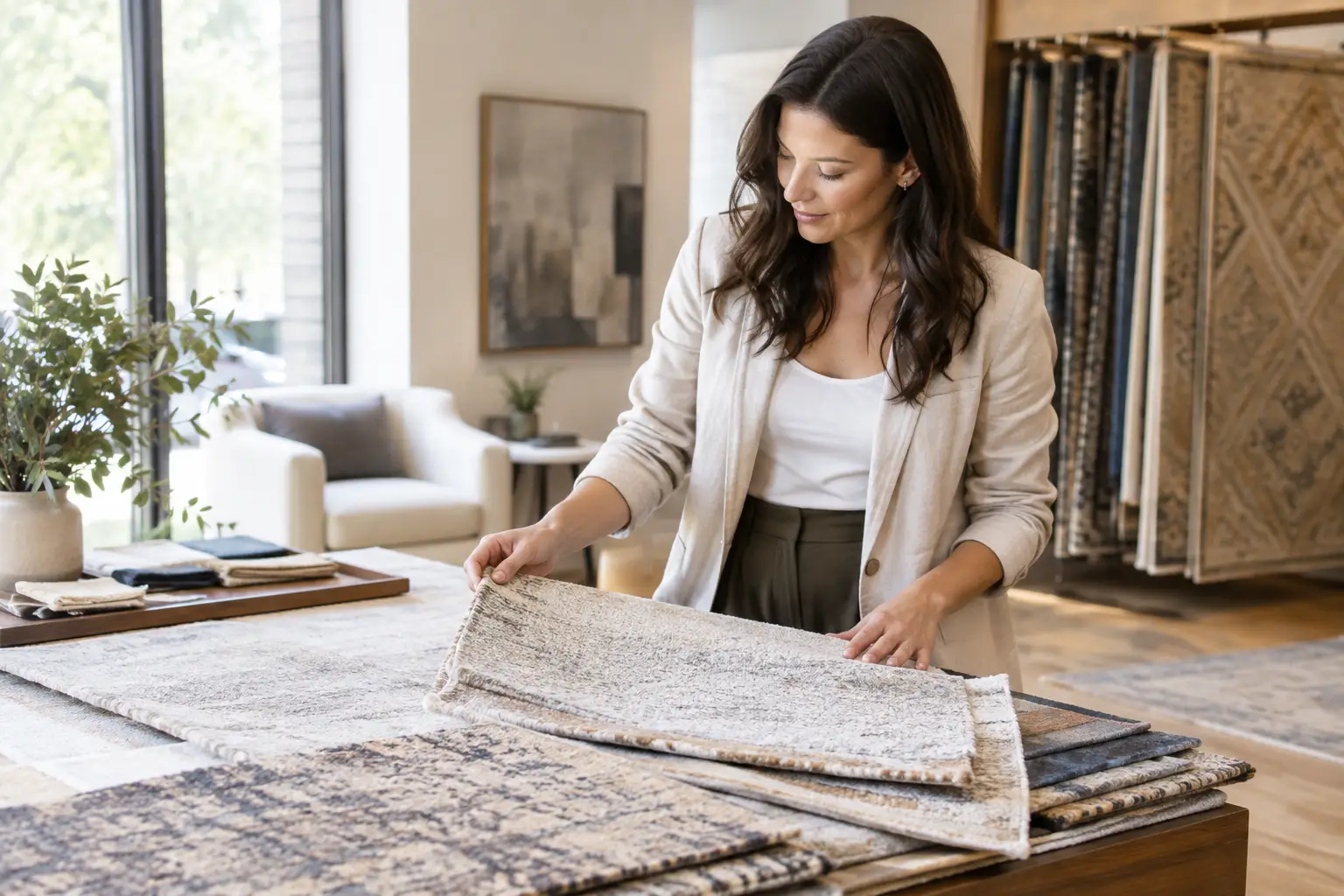
A rug is often the first object a client notices after a room is finished, even when it was selected early in the process. It sits beneath the furniture, softens the acoustics, gathers the palette, and quietly decides whether the space feels composed or merely furnished. That is why interior designer rug sourcing is less about finding something attractive and more about selecting a textile with the right scale, material, history, and presence for a particular room.
For designers, the most rewarding rugs are rarely interchangeable. A handwoven vintage Oushak, a faded Persian Mahal, or an earthy Sultanabad can bring nuance that a uniform floor covering cannot. The irregularities are part of the appeal: a softened field, a slightly abrased motif, a color that changes gently from one end to the other. These details make a room feel lived in, collected, and particular to its owner.
Interior Designer Rug Sourcing Begins With the Room
The practical questions should come before the aesthetic ones. Measure the room, map the furniture placement, and establish what the rug needs to do. In a living room, it may need to hold the front legs of every major seating piece and create a generous conversation area. In a dining room, it must extend comfortably beyond pulled-back chairs. In a bedroom, it might frame the bed or provide warmth where bare feet first meet the floor.
A rug that is too small tends to make even beautiful furniture feel disconnected. A larger rug can feel generous and architectural, especially in rooms with high ceilings or multiple seating zones. Yet bigger is not automatically better. A narrow hallway needs a runner with breathing room at either side, while a compact breakfast nook may benefit from a smaller, more focused shape. The correct choice depends on the room’s circulation, not only its square footage.
It also helps to decide whether the rug is an anchor or an accent. An anchor rug establishes the room’s visual foundation, often through a broad, quiet field and restrained pattern. An accent rug may introduce contrast, a strong border, or a memorable shift in color. Neither role is superior, but confusion between the two can lead to a space that feels overworked.
Look Beyond a Perfect Palette Match
Many sourcing decisions begin with a request for a specific color. That is understandable, but exact matching can flatten a room. Handmade rugs are especially valuable because their colors are rarely one-note. What reads as blue from across the room may contain slate, denim, faded indigo, soft gray, and a trace of warm ivory. A red may lean toward rust, rose, brick, or pomegranate depending on the light.
This complexity is useful. Rather than asking whether a rug matches the sofa precisely, consider whether it creates a thoughtful relationship with the upholstery, drapery, art, and wood tones. A muted antique Persian rug can temper crisp contemporary furniture. A larger-scale Turkish Oushak can add movement to a room defined by tailored upholstery and clean-lined millwork. A quiet neutral rug can give sculptural lighting or expressive artwork room to speak.
Natural light matters as much as a color card. A rug photographed in bright daylight may appear warmer in a north-facing room or more subdued beneath evening lamps. Before committing, designers should consider the home’s light throughout the day and the undertones already present in stone, flooring, painted walls, and case goods. A good rug does not need to repeat every color in the room. It needs to make the existing colors feel more intentional.
Pattern Is About Pace, Not Just Style
Pattern changes the pace of a space. Fine Persian drawing can bring intimacy and detail to a formal library, while a more open Oushak pattern may feel at ease beneath a large dining table or in a relaxed living room. A rug with a spacious field can calm a room with patterned fabric and layered accessories. Conversely, a room of quiet solids may need the visual rhythm of an antique allover design.
There is a useful trade-off to keep in mind. Highly detailed rugs reward close viewing and can lend a room a sense of richness, but they may compete with intricate wallpaper or expressive upholstery. Simpler rugs offer more flexibility, though they should still have enough variation in weave, color, or texture to avoid feeling blank. The best decision comes from viewing the entire material story rather than evaluating the rug in isolation.
Provenance and Construction Shape the Choice
A handmade rug carries information in its construction. Wool has body, resilience, and a gentle luster that improves with use. Cotton foundations can give a piece structure, while silk details may heighten luminosity but require more careful placement. The weave, pile, age, and condition all affect how a rug will live in a home.
For a busy family room, a low to medium wool pile with a forgiving pattern is often a practical choice. Vintage rugs with softened color and naturally varied surface can be especially accommodating around daily life. In a primary bedroom or formal sitting room, a more delicate antique piece may be entirely appropriate because traffic is lighter and the setting is more controlled.
Age should never be treated as a decorative label alone. An antique rug may show repairs, low areas, fringe wear, or gentle fading, and these characteristics should be understood rather than hidden. They can be part of its beauty and proof of a long textile life. Still, the right level of patina depends on the client. One household may value a visibly timeworn piece with soul; another may need a vintage rug in especially strong condition for a polished, tailored interior.
Regional traditions also offer useful design language. Sultanabads are admired for their generous scale and warm, approachable palettes. Oushaks often bring an airy, decorative quality that works beautifully in layered interiors. Persian rugs can range from refined and intricate to softly rustic, depending on their origin and age. Knowing these distinctions gives a designer a more precise vocabulary when sourcing, but the room should remain the final authority.
Interior Designer Rug Sourcing Is a Budget Conversation
A clear budget does not limit creativity. It helps direct the search toward the right size, age, condition, and construction from the start. One-of-a-kind rugs vary widely because no two pieces share the same combination of provenance, materials, rarity, and condition. A large antique carpet with exceptional color will be priced differently from a smaller vintage rug with more visible wear, even if both are beautiful.
The most useful client conversations separate non-negotiables from preferences. If a 10-by-14 size is essential, that should lead the search. If the client is open to a range of colors but wants a quiet, timeworn appearance, there may be more room to find an exceptional piece. If the rug must withstand pets, children, and frequent entertaining, practical construction should carry more weight than a delicate finish.
Designers also benefit from reserving enough time for the process. A one-of-a-kind rug cannot simply be reordered when it sells. When a piece is right in scale, palette, and feeling, hesitation can mean losing it. At the same time, urgency should not replace judgment. Requesting measurements, condition details, and additional imagery is part of responsible sourcing, particularly when buying online.
Work With a Source That Knows the Inventory
The difference between browsing inventory and sourcing with intention is guidance. A knowledgeable rug partner can translate a floor plan, finish schedule, and client brief into a focused selection. That guidance is particularly helpful when the request is specific but not easily described: something warm but not orange, traditional but not formal, or pale enough for a coastal room without becoming overly casual.
At Eskici Rugs, designers work directly with people who know the pieces and the handmade rug market. With more than 30 years of experience and established relationships with sellers and suppliers, the trade program supports project-based sourcing beyond a fixed assortment. Sharing the room dimensions, design direction, intended use, and budget makes it possible to search with greater precision.
This personal approach matters because a rug is not merely a final layer. It is a material decision that influences everything around it, from the perceived warmth of oak flooring to the way a linen sofa reads against the ground plane. The right piece can make a new room feel as though it has always belonged there.
When a project calls for something with history, trust the rug that holds the room together without asking for all the attention. Those are often the pieces clients remember longest.