
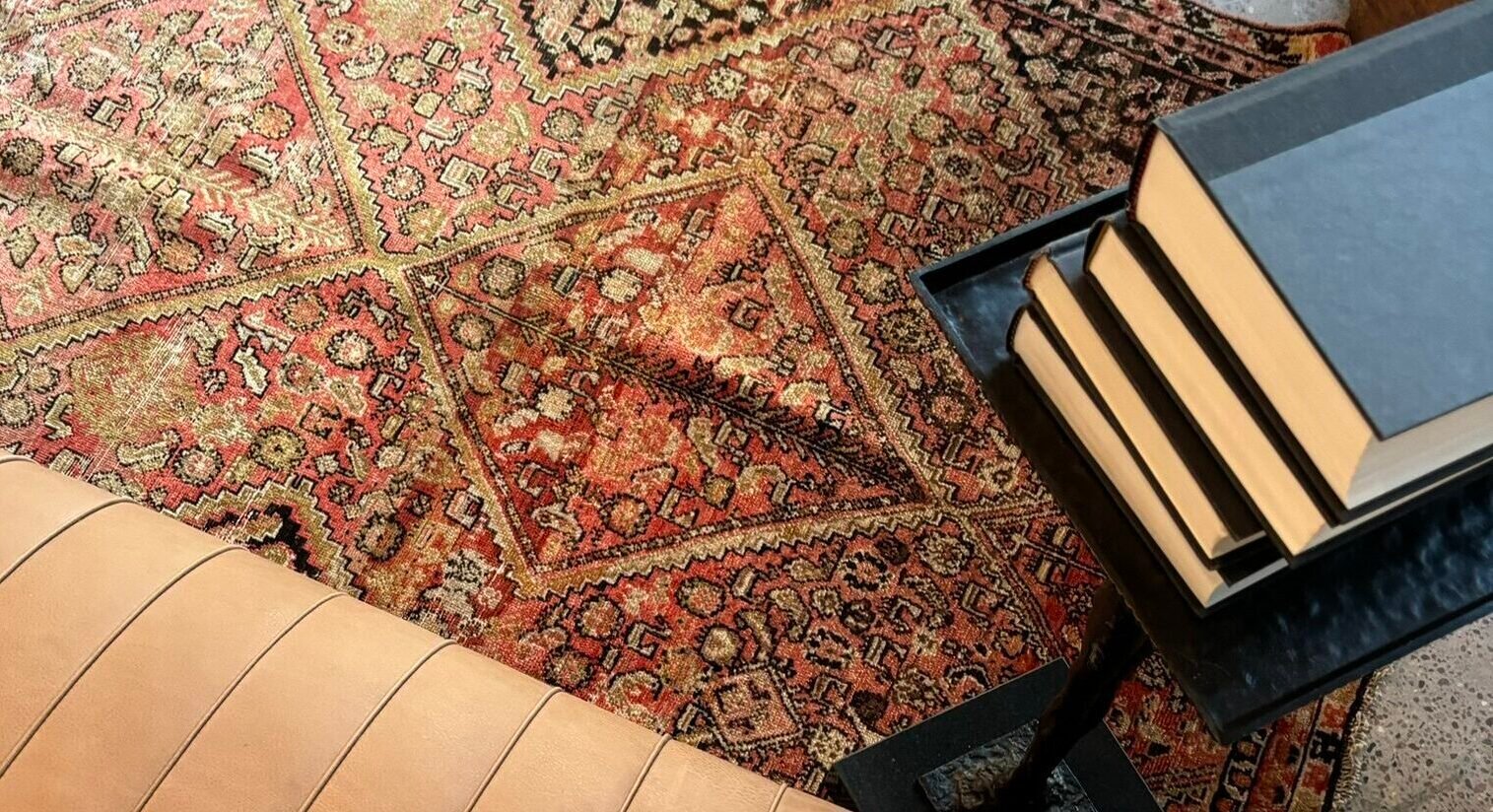
A vintage rug can steady a room faster than almost anything else. It softens hard architecture, gives new furniture a sense of history, and brings the kind of variation that flat, machine-made pieces rarely offer. If you are wondering how to style vintage rugs in a way that feels intentional rather than overly decorated, the answer usually begins with restraint. Let the rug do more of the work.
Vintage rugs have a particular advantage in interior design because they arrive with depth already built in. Faded terracotta, softened indigo, worn gold, quiet walnut, and low-contrast ivory read almost like neutrals, even when the pattern is intricate. That is why they can anchor a room without making it feel busy. The styling goal is not to compete with that character, but to place it where it can shape the room naturally.
How to style vintage rugs by starting with the room
Before choosing colors, pillows, or accent pieces, look at the room itself. The architecture, the amount of natural light, and the scale of the furniture all affect how a vintage rug will read. A pale Oushak with an open field can calm a room with strong millwork or darker wood tones. A denser Persian pattern can give structure to a more minimal space that needs visual weight.
This is where many people overcomplicate the process. A rug does not need to match everything in the room. It needs to relate to it. That might mean echoing one color from a painting, softening the lines of contemporary upholstery, or warming up a room that feels slightly cold. Styling becomes easier when you stop looking for exact coordination and start looking for balance.
In a living room, the rug should usually establish the seating area first. In a bedroom, it should bring softness where your feet land and extend the visual width of the bed. In a dining room, it needs enough scale to accommodate chairs when they are pulled out. The most beautiful rug will still feel wrong if the proportions are off.
Size matters more than pattern
If there is one principle worth treating as non-negotiable, it is scale. Undersized rugs make even well-furnished rooms feel unsettled. Vintage rugs often have extraordinary detail, but no amount of character can correct a poor fit.
In a living room, the strongest result usually comes when at least the front legs of the main seating pieces sit on the rug. In larger rooms, placing all furniture on the rug creates a more composed, architectural look. In bedrooms, a rug that extends beyond both sides and the foot of the bed tends to feel generous and finished. In hallways, a runner should leave a visible border of flooring on each side so it feels framed rather than squeezed in.
There are exceptions, of course. A smaller antique rug can be striking under a coffee table or beside a bed when the room is layered thoughtfully. But that works best when it feels deliberate, not like a sizing compromise. When in doubt, go larger.
Let the palette lead, but not too literally
One of the pleasures of styling vintage rugs is that their colors are rarely blunt. Time, natural dyes, and wear tend to soften the palette, which gives you more flexibility than you might expect. A rug with rust, sand, faded blue, and olive can sit comfortably in a room that includes cream upholstery, dark wood, linen drapery, and black accents because none of those tones are shouting.
Rather than pulling every color from the rug into the room, choose one or two notes to repeat lightly. If the rug carries muted rose or brick, that might return in a lumbar pillow, artwork, or ceramic detail. If it has tobacco and walnut tones, those can be reinforced through wood finishes or leather. This creates connection without becoming staged.
It also helps to think in terms of temperature. Warm-toned rugs make white walls and pale upholstery feel more inviting. Cooler rugs with blue, slate, or soft green can steady rooms with a lot of sun or stronger golden wood tones. Neither approach is better. It depends on whether the space needs warmth, contrast, or quiet.
How to style vintage rugs with modern furniture
This is often where vintage rugs are at their best. A room with clean-lined upholstery, simple case goods, and restrained lighting can benefit enormously from the irregularity of an older woven piece. The rug introduces patina and movement, which keeps the room from feeling too new or overly polished.
The key is contrast with control. If the furniture is crisp and contemporary, a rug with visible age and softened color can create a balanced tension. If the furniture already has a lot of carved detail, turned legs, or decorative silhouettes, a more open and understated vintage rug may be the better choice.
Material contrast matters too. Boucle, linen, oak, plaster, leather, and stone all pair well with handmade vintage textiles because they share a tactile honesty. Rooms feel richer when surfaces vary. A rug does not just add pattern underfoot. It changes how every surrounding finish is perceived.
Layering creates depth when the room needs it
Layering can be effective, but it should solve a design problem rather than follow a trend. A smaller vintage rug over a larger natural fiber base works well when you want to highlight a collectible piece, define a zone in a larger room, or add softness without losing scale. Jute or wool-sisal styles are common foundations because they are visually quiet.
That said, layering is not always necessary. A large vintage rug with the right proportions often feels more elegant on its own. If the room already has strong pattern in drapery, wallpaper, or upholstery, an additional layer may feel excessive. The room should still have places for the eye to rest.
For designers and homeowners who appreciate collected interiors, layering is most successful when the tonal relationship is calm. Let texture create the interest, not sharp contrast between the rugs.
Use placement to shape the mood
A vintage rug does more than fill empty floor space. Its position changes the room’s rhythm. Centered placement tends to feel classic and formal, especially in living and dining rooms. Slightly off-center placement can feel more relaxed, particularly in bedrooms, reading corners, or spaces with asymmetrical architecture.
In open-plan interiors, rugs help separate functions without adding walls. One rug can anchor the seating area while another defines the dining space, but they should still speak to each other. That does not mean matching. It means sharing a similar level of saturation, age, or tone so the spaces feel connected.
Runners deserve the same attention. In entryways and halls, they set the first impression of the home. A runner with quiet character can make a narrow passage feel considered rather than transitional. In kitchens, a vintage runner can soften cabinetry and stone, though practicality matters here. Lower pile and durable wool are usually the wiser choice for higher-traffic zones.
Respect the rug’s age without treating it as fragile decor
Part of learning how to style vintage rugs is understanding that they are both functional and storied. Many were made to be lived with. That does not mean placing a delicate antique piece anywhere without thought, but it does mean you do not need to treat every vintage rug as untouchable.
Choose according to traffic and use. A sturdier vintage Oushak or low-pile wool runner can handle active rooms beautifully. More delicate antique pieces may be better suited to lower-traffic spaces like bedrooms, studies, or sitting rooms. A rug pad helps with longevity, comfort, and placement, especially on hard floors.
It is also worth embracing some imperfection. Slight asymmetry, gentle wear, abrash, and softened borders are part of what gives a handmade rug its presence. Those details often make a room feel more authentic, not less refined.
Styling vintage rugs in a way that lasts
The most compelling rooms are rarely built around novelty. They are shaped through contrast, patience, and pieces that hold attention over time. A vintage rug does this almost effortlessly, which is why it often becomes the element everything else gathers around.
If you are styling one for the first time, begin with proportion, then let color and texture follow. Notice what the room is missing – warmth, softness, structure, history – and choose accordingly. A well-placed vintage rug should not feel like decoration added at the end. It should feel like the room finally found its center.
At Eskici Rugs, that is exactly what the best pieces tend to do. They bring quiet definition, a sense of age, and the kind of visual depth that makes a home feel more personal the longer you live with it.