
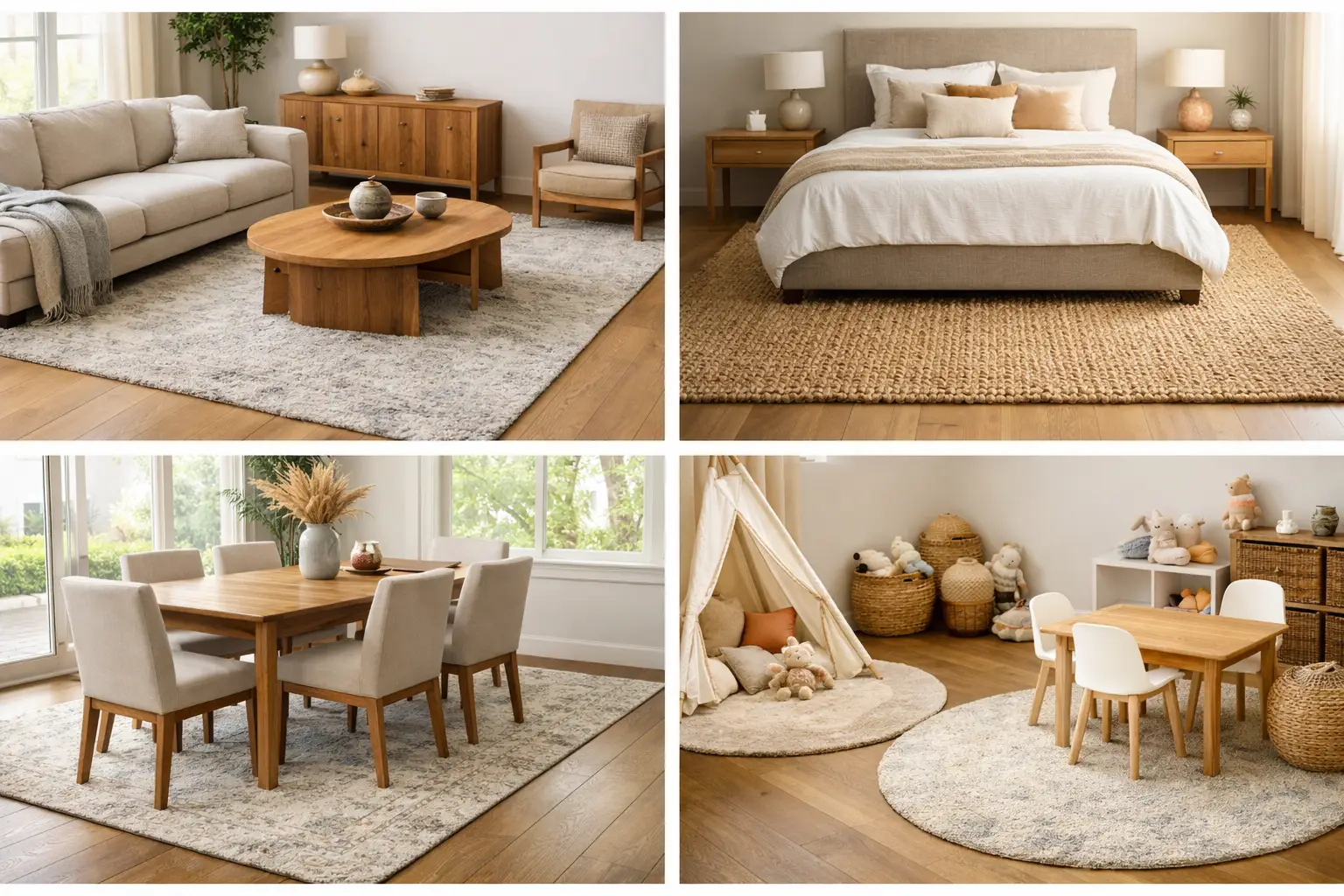
A rug that is too small does not simply miss the mark – it changes the scale of the entire room. Seating can feel disconnected, a dining table can look adrift, and even a beautiful handmade rug loses some of its quiet presence when the proportions are off. If you are wondering how to choose rug size, the answer begins less with the rug itself and more with the furniture, architecture, and the kind of room you want to create.
With vintage and handmade rugs, sizing matters even more because each piece has its own character. You are not choosing a generic floor covering. You are placing a textile with history, texture, and visual weight into a space that needs balance. The right size allows that piece to anchor the room naturally rather than feeling like an accessory added at the end.
How to choose rug size by starting with the room
The most reliable approach is to think of the rug as part of the furniture plan, not separate from it. A rug should define a zone and support the arrangement above it. In a living room, that usually means connecting seating. In a dining room, it means framing the table and chairs. In a bedroom, it should soften the perimeter around the bed rather than disappear beneath it.
Before you look at dimensions, measure the open floor area and note where major furniture legs will sit. Also pay attention to architectural features such as fireplaces, built-ins, and door clearances. A room can technically fit one size and still feel better with another depending on traffic flow and visual symmetry.
Leaving some visible floor around the rug is usually the right instinct. That border creates contrast and lets the rug read as a deliberate layer. In most rooms, a margin of 8 to 18 inches between the rug and the wall feels balanced, though larger spaces can handle more. The exact amount depends on the room size, the furniture scale, and how tailored or relaxed you want the space to feel.
Living room rug sizing
The living room is where rug proportion has the greatest impact. The most common mistake is choosing a rug that floats in the center with no real relationship to the seating. It may show off more flooring, but it often makes the room feel smaller and less resolved.
For most living rooms, the strongest arrangement places at least the front legs of the sofa and chairs on the rug. This creates a unified conversation area and gives the room a sense of structure. If the room is generous enough, placing all furniture legs on the rug can feel especially composed and architectural.
A smaller rug can work under a coffee table only, but this tends to be best in compact spaces or layered rooms where another larger foundation already exists. Otherwise, it can read as undersized. If you are working with a one-of-a-kind vintage rug and the ideal dimensions are not available, it is usually better to go slightly larger than slightly smaller.
Color and pattern also affect perceived scale. A pale, open-field Oushak can feel expansive even in a modest size, while a darker, denser rug may feel more visually compact. That does not change the measurements, but it does shape how the room reads once the rug is in place.
A practical living room rule
Measure your seating group, then add enough rug on each side so the arrangement feels held together rather than perched on the edge. If only a few inches of rug extend beyond the sofa arms, the result can feel tight. A more generous border usually looks more considered.
Dining room rug sizing
Dining rooms follow a stricter rule because chairs need to remain on the rug when pulled out. That means the rug must extend beyond all sides of the table enough to accommodate both the table and the chair movement. If the chair back catches on the edge of the rug every time someone sits down, the rug is too small regardless of how good it looks under the table alone.
As a general guide, allow at least 24 inches beyond the table on every side. In some rooms, 30 inches is even better, particularly with wider dining chairs. This extra space keeps the arrangement functional and visually calm.
Shape matters here as well. A rectangular table usually sits best on a rectangular rug, while a round table often feels more natural on a round or square rug. But proportion is still the deciding factor. An unusual pairing can work beautifully if the scale is right.
With antique or vintage rugs, some variation in dimension is part of the charm. Handmade pieces are rarely as mathematically exact as machine-made alternatives. That slight irregularity is not a flaw. It is part of what gives the room warmth and keeps the space from feeling overly rigid.
Bedroom rug sizing
Bedrooms benefit from softness and generosity. The rug should extend far enough around the bed that your feet land on it when you rise, not just when you stand in one exact spot. A rug that disappears almost entirely under the bed offers little visual or practical payoff.
For a queen or king bed, placing a large rug horizontally under the lower two-thirds of the bed often creates the most balanced result. This leaves enough rug visible on both sides and at the foot of the bed while avoiding unnecessary bulk behind the headboard. In a primary bedroom, this tends to feel grounded and luxurious without excess.
Smaller rugs can work as runners on each side of the bed or at the foot, especially in layered interiors or narrower rooms. This approach has a lighter presence and can be useful when you want to introduce textile character without covering too much floor. It is also a thoughtful solution when working with rare vintage pieces that may not come in standard bedroom sizes.
How to choose rug size for a bedroom with other furniture
Consider the placement of nightstands, benches, and dressers. Nightstands usually sit comfortably with the bed on the rug, but dressers often remain off it. If a bench at the foot of the bed is partially on and partially off the rug, the arrangement can look unresolved. It is worth mapping the furniture before you decide.
Hallways, entryways, and narrow spaces
In transitional spaces, the rug should echo the architecture rather than fight it. A hallway runner that is too narrow can make the corridor feel longer and thinner. One that is too wide can crowd the edges and look forced.
Aim for a consistent border of visible floor on either side, usually 4 to 6 inches in narrower hallways and a bit more in larger passages. In an entryway, make sure the rug allows the door to clear comfortably and suits the shape of the space. A long runner, a compact accent rug, or even an unusually proportioned vintage piece can work if it respects the room’s rhythm.
These smaller areas are often where antique and vintage rugs shine. Their texture and patina bring warmth to places that might otherwise feel purely functional.
When standard rug rules do not quite apply
Not every room needs textbook sizing. A small sitting room may benefit from a slightly more modest rug if the furniture is delicate and the architecture is prominent. A large open-plan space may need a rug that defines one zone while allowing another to remain bare. And with one-of-a-kind rugs, exact dimensions are not always available.
This is where judgment matters. If you are choosing between a piece that is nearly right in size and one that is perfect in proportion but lacks character, the better room is often built around the rug with more soul. At Eskici Rugs, this is often part of the conversation: finding the size that works while leaving room for the individuality of the piece itself.
Painter’s tape can help. Outline the rug dimensions directly on the floor before you buy. Walk around the room, pull out chairs, and stand at the doorway. The tape reveals very quickly whether the rug feels composed, cramped, or too sprawling.
A few mistakes worth avoiding
The first is sizing only for the empty room rather than the furnished one. Rugs do not live in vacant floor plans. They live under real tables, sofas, and beds.
The second is choosing a rug that matches the room dimensions too closely. Without a border of visible flooring, the space can feel wall-to-wall even when it is not.
The third is assuming a beautiful rug will solve a weak layout. Even an extraordinary Persian or Oushak rug cannot correct furniture that is poorly arranged around it. Proportion and placement work together.
A well-sized rug does more than fit. It gives the room a center of gravity, brings furniture into conversation, and lets craftsmanship speak with clarity. When the scale is right, the whole space feels quieter, warmer, and more assured. That is usually the moment you stop noticing the measurements and start noticing the room.