
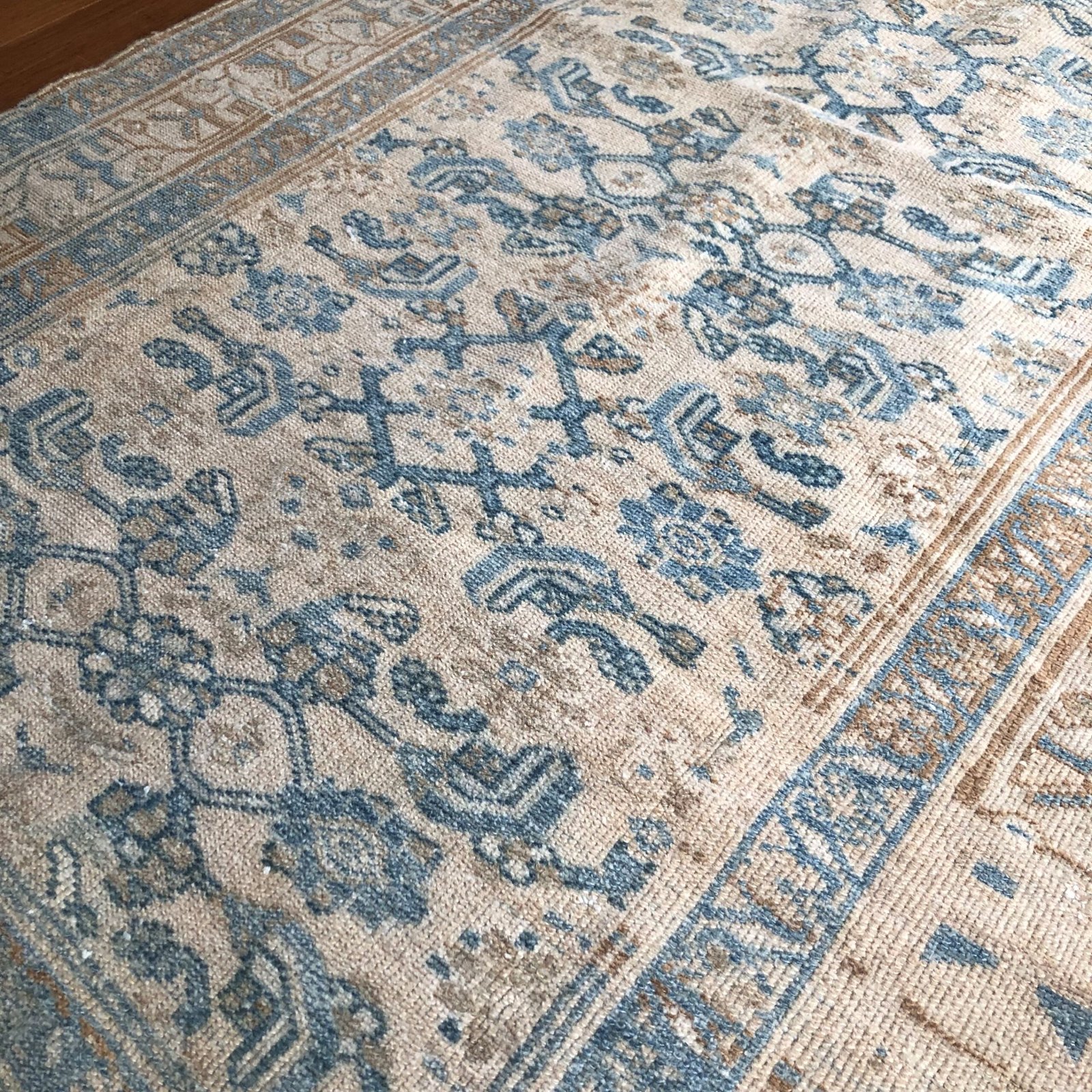
A room rarely feels finished when every surface is new. The upholstery may be tailored, the lighting may be right, and the architecture may carry the space, but without something that introduces age, variation, and softness underfoot, interiors can feel overly resolved. That is part of why vintage rug trends continue to resonate. They bring in the kind of visual depth that cannot be replicated by flat, uniform production.
What is changing is not the appeal of vintage rugs themselves, but how they are being used. The strongest interiors are moving away from the idea of the rug as a background accessory and toward the rug as a defining layer – one that sets the palette, shapes the mood, and gives a room its sense of permanence.
Vintage rug trends are getting quieter, not louder
For years, many buyers associated vintage rugs with heavily distressed finishes, dramatic overdyed color, or high-contrast patterns meant to make an immediate statement. Those looks still have a place, particularly in eclectic spaces, but the broader shift is toward subtlety. Designers and homeowners are choosing rugs with softened palettes, nuanced wear, and patterns that reveal themselves gradually.
This is less about playing it safe and more about wanting interiors that hold attention over time. A vintage Oushak in sand, terracotta, and muted brown offers complexity without visual noise. A timeworn Persian rug with a low, luminous pile can anchor a room more effectively than something sharper and newer because it allows the rest of the space to breathe.
The appeal here is emotional as much as aesthetic. Quiet character feels settled. It makes even a recently furnished room seem lived in, considered, and personal.
The return of warm neutrals
One of the clearest vintage rug trends is the move away from stark gray and toward warmer neutrals. Cream, camel, blush-beige, tobacco, rust, faded olive, and washed indigo are replacing cooler, more industrial tones. This aligns with a broader interior shift toward natural materials, plaster-like finishes, unlacquered wood, and rooms that feel softened by light.
Vintage rugs are especially suited to this palette because their colors are rarely one-note. Even an ivory-ground rug often carries undertones of apricot, honey, or pale gold. That variation matters. It keeps neutral rooms from feeling flat and helps connect separate materials such as linen upholstery, walnut tables, antique brass, and stone.
For decorators, this warmth also offers flexibility. A rug in nuanced neutrals can sit comfortably in minimalist spaces, traditional rooms, and layered transitional interiors without looking generic. It supports the architecture rather than competing with it.
Why Oushaks remain especially relevant
Oushak rugs continue to appear in beautifully layered interiors for a reason. Their large-scale motifs, soft wool, and approachable palettes make them easy to place, but they never feel ordinary. They often have an openness to the pattern that works especially well in American homes where living spaces need both presence and ease.
That does not mean every room needs an Oushak. In some interiors, a finer Persian weave or a more geometric village rug will bring better balance. But when the goal is warmth, movement, and a sense of relaxed refinement, Oushaks remain remarkably current.
Scale matters more than trend
Another shift worth noting is that clients are becoming more disciplined about size. This may not sound like a trend in the aesthetic sense, but it has changed how vintage rugs are selected. A beautiful rug loses much of its impact when it is too small for the room. The current preference is for proper scale – rugs that sit confidently under key furniture and create a cohesive field rather than floating as an afterthought.
This is particularly noticeable in living rooms and dining rooms. Instead of choosing a vintage rug based only on pattern and then forcing it into the layout, buyers are increasingly starting with dimensions and then narrowing by style. That approach tends to produce better interiors because the rug can actually do its job: define the space, add comfort, and support the furniture arrangement.
For hallways and kitchens, the same principle applies in a different way. A runner should feel intentional, not undersized. Length, rhythm, and visual continuity matter just as much in transitional spaces as they do in larger rooms.
Vintage rug trends in color are becoming more atmospheric
The old formula of matching a rug directly to the room is giving way to something more nuanced. Rather than pulling the exact blue from the drapery or the exact brown from the floor, designers are using vintage rugs to create atmosphere. That might mean bringing in a faded rose and ochre rug to soften a room of creams and wood tones, or placing a washed blue Persian under a dining table to cool down a warmer scheme.
This layered use of color is one reason vintage pieces feel so enduring. Their palettes often contain many small color conversations at once. A rug can echo the trim, counterbalance the sofa, and introduce a note that appears nowhere else but still makes the room richer.
There is a trade-off here. More atmospheric color requires confidence. It asks the buyer to think in terms of harmony rather than exact matching. But the result is usually more sophisticated and less decorated in the obvious sense.
Faded reds, terracottas, and tobacco tones
Among the tones gaining renewed attention, faded reds deserve special mention. Not bright primary reds, but oxidized brick, terracotta, dusty garnet, and tobacco-inflected rust. These shades add depth without harshness and bring a collected feeling to otherwise restrained rooms.
They are especially effective in spaces that need warmth but cannot support heavy visual contrast. A vintage Sultanabad or Persian rug with these tones can ground pale upholstery and light oak beautifully, especially when the room needs more soul than sparkle.
The mix of old rugs with cleaner interiors
Perhaps the most interesting development is how vintage rugs are being used in rooms with fewer decorative layers. The rug is no longer confined to overtly traditional settings. It now appears under sculptural sectionals, in spare bedrooms with plaster walls, and in dining rooms where the furniture lines are quite clean.
This contrast works because a handmade rug introduces human irregularity. The slight shifts in dye, the softened edges of the motif, and the patina of age prevent minimalist interiors from becoming sterile. At the same time, the cleaner backdrop allows the rug’s craftsmanship to be read more clearly.
It depends, of course, on proportion and tone. A highly intricate, jewel-toned antique may feel too formal in a very pared-back space. But a vintage piece with openness in the field and a softened palette can create exactly the right tension between refinement and ease.
Character is overtaking perfection
A meaningful shift within vintage rug trends is the growing appreciation for visible variation. Buyers are less concerned with finding a piece that looks untouched and more interested in one that feels authentic. Slight wear, abrash, irregular borders, and evidence of age are increasingly understood as part of the rug’s beauty.
This does not mean condition is irrelevant. Structure, durability, and overall integrity still matter. A rug should be able to perform in the room where it will live. But there is a difference between damage and character, and experienced buyers know that distinction gives a piece its presence.
This is where curation matters. In an unfiltered market, it can be difficult to tell whether a rug’s wear adds charm or compromises its longevity. A carefully selected vintage piece should feel soulful, not fragile; distinctive, not risky.
Why one-of-a-kind rugs feel especially current now
There is a broader cultural reason these rugs continue to gain ground. Many homeowners are tiring of interiors that can be assembled in a weekend from identical sources. They want spaces that feel edited rather than filled. A one-of-a-kind rug answers that desire immediately.
It introduces history, craftsmanship, and individuality in a single move. It also changes how the rest of the room comes together. Once a vintage rug is in place, choices around upholstery, lighting, wood tone, and art often become clearer because the room has a point of view.
That is part of the enduring appeal behind the strongest vintage selections at Eskici Rugs and elsewhere: not trend for trend’s sake, but pieces with enough depth to shape a room for years.
The most lasting choice is rarely the loudest one. It is the rug with the right scale, the right warmth, and the kind of quiet character that keeps revealing itself long after everything else has been installed.