
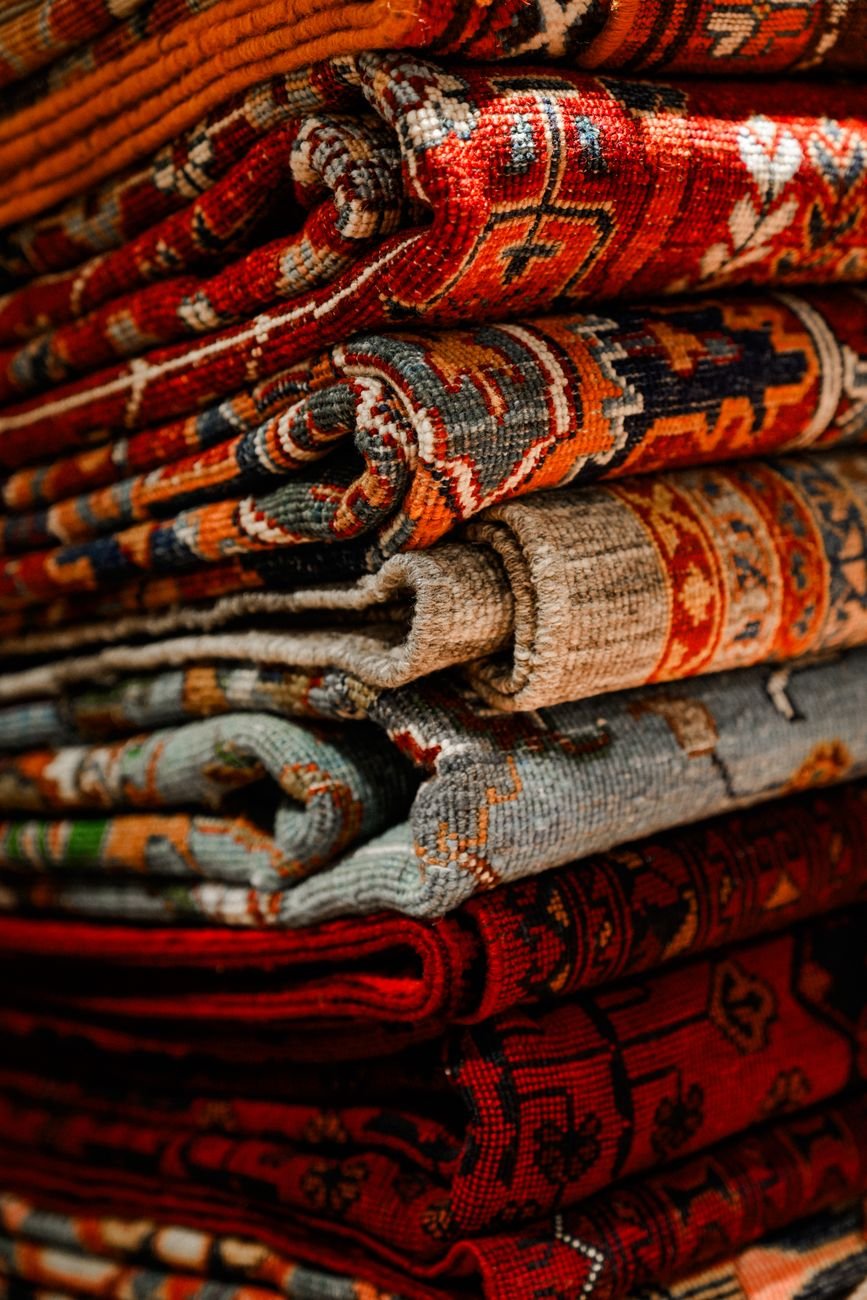
A living room can have beautiful upholstery, thoughtful lighting, and well-made case pieces and still feel unresolved. Often, the missing element is underfoot. The best vintage rug living room ideas do more than add pattern – they establish scale, soften architecture, and give the room a sense of history that newer pieces rarely match.
A vintage rug also changes the way a space is read. It can quiet a room filled with hard lines, bring warmth to pale floors, or connect furniture that otherwise feels visually separate. That is why the most successful rooms tend to treat the rug as a foundational design decision rather than a finishing touch.
Why vintage rugs work so well in living rooms
Living rooms ask a lot of a rug. It has to anchor seating, absorb daily use, and contribute character without overwhelming the room. Vintage handmade rugs are especially effective here because they carry visual depth that feels settled rather than sharp. Their softened palettes, irregular abrash, and gentle wear make a room feel layered from the start.
There is also a practical advantage to that lived-in quality. A rug with age often hides day-to-day traffic more gracefully than a flat, newly printed pattern. For households that want beauty without a precious atmosphere, that balance matters. Still, the right choice depends on the room. A highly decorative Persian with intricate drawing creates a different mood than an open-field Oushak or a quietly faded Turkish piece.
Vintage rug living room ideas for a more grounded room
1. Start with the rug, not the accent pillows
If the living room still exists mostly in samples and mood boards, begin with the rug. This is especially useful when the goal is a room that feels collected instead of coordinated. A one-of-a-kind vintage rug brings enough color information and texture to guide everything that follows, from paint and upholstery to wood tone and metal finish.
This approach is often easier than trying to fit a rug into a fully furnished room. Once a rug is chosen first, the rest of the palette becomes clearer. You can pull a muted rust into a lumbar pillow, repeat a soft blue in drapery, or let cream and walnut furnishings support the textile rather than compete with it.
2. Use a larger rug than you think you need
One of the most common living room missteps is choosing a rug that floats in the center of the space, disconnected from the furniture. In most seating layouts, the rug should at least catch the front legs of the sofa and chairs. In larger rooms, it should sit comfortably beneath the full arrangement.
A vintage rug with proper scale immediately makes a room feel more resolved. Smaller rugs can work, but usually in layered settings or compact rooms where the furniture footprint is intentionally tight. If the room feels fragmented, size is often the issue before color ever is.
3. Let faded color do the heavy lifting
Many homeowners want color but not brightness. This is where vintage rugs are particularly strong. A gently aged coral, muted terracotta, washed indigo, or softened olive can warm a room without making it feel busy.
In quieter interiors, these nuanced tones act almost like neutrals. They add dimension to linen upholstery, oak tables, plaster walls, and antique brass without asking for attention at every angle. If the room already has strong art or patterned seating, a lower-contrast rug may offer more longevity than a high-saturation piece.
4. Pair traditional pattern with cleaner furniture
Some of the most enduring rooms rely on contrast. A vintage rug with classical motifs grounds contemporary seating beautifully, especially when the furniture has simple silhouettes. The tension between old and new keeps the room from becoming overly formal or overly spare.
This is often the best route for clients who admire heritage textiles but live in architecture that leans modern. A worn Persian or Turkish rug can soften a clean-lined sofa, sculptural coffee table, and minimal lighting plan. The room gains warmth and memory without losing clarity.
5. Try an Oushak for an open, airy layout
Not every living room benefits from a densely patterned rug. In lighter spaces with tall ceilings, pale floors, or generous natural light, an Oushak often feels especially at home. The larger-scale motifs and quieter fields typical of many Oushak rugs allow the room to breathe.
This can be a smart choice when you want the rug to anchor the room while still keeping the atmosphere calm. Cream, sand, faded gold, and pale blue palettes sit beautifully with natural materials and relaxed upholstery. The effect is timeless rather than trend-driven.
How to balance furniture around a vintage rug
6. Build a seating arrangement that acknowledges the rug
A rug should not feel like an isolated artwork placed under random furniture. The seating plan has to respond to it. If the rug has a strong central medallion, center the coffee table and main conversation zone with intention. If it has a more open field, you have greater flexibility with asymmetry and layered pieces.
This matters even more in large living rooms where multiple focal points compete. The rug can help define where conversation happens and where circulation moves around it. Once the rug establishes a visual center, furniture placement usually becomes more intuitive.
7. Layer when architecture or size is tricky
Some rooms do not conform neatly to standard rug dimensions. Others need softness over wall-to-wall carpet, extra coverage in a loft, or a way to highlight a smaller collectible textile. In those cases, layering can be thoughtful rather than casual.
A larger natural fiber rug beneath a vintage piece creates scale while preserving the presence of the handmade rug on top. This works especially well when you have a smaller antique or vintage rug with beautiful character that would otherwise feel undersized in the room. The trade-off is that layering asks for a bit more visual discipline. Keep surrounding patterns quieter so the room does not become overworked.
8. Repeat one or two rug colors elsewhere
A vintage rug does not need a perfectly matched room, but it does benefit from conversation with the rest of the palette. Repeating one or two tones elsewhere creates continuity. A faded brick from the rug might reappear in a throw, artwork, or leather accent, while a muted blue can connect to ceramics or drapery.
The key is restraint. Pulling every color from the rug into the room can feel too literal. The most elegant spaces allow some notes to remain exclusive to the textile, which preserves its depth and keeps the scheme from looking overly planned.
Vintage rug living room ideas by mood
9. For a quiet, tonal room, choose texture over contrast
If the room is meant to feel serene, look for a vintage rug with a narrowed palette and visible patina rather than sharp contrast. Soft ivory, dusty beige, faded rose, and pale tobacco tones bring warmth to neutral rooms without flattening them.
This is particularly effective in interiors built around limewash walls, creamy upholstery, travertine, or weathered wood. The rug becomes the source of subtle movement. It keeps the room from feeling sterile while preserving a calm atmosphere.
10. For a collected room, mix periods with confidence
A vintage rug gives permission to combine furnishings from different eras. Mid-century chairs, a traditional cabinet, contemporary art, and an antique textile can coexist beautifully when the rug acts as the visual bridge. Its age and complexity help absorb stylistic contrast.
The room feels designed rather than matched. That distinction matters. The most memorable living rooms rarely look purchased all at once.
11. For high-traffic spaces, embrace rugs with character
Families and entertaining spaces often need durability without losing refinement. In these rooms, a vintage rug with some wear, variation, and softer edges can be the better choice than something too pristine. A little age tends to make everyday use feel more natural.
That does not mean quality is less important. Construction, fiber, and weave still matter. But visually, a rug with quiet character often settles into real life more gracefully than one that looks untouched.
What to avoid when styling a vintage rug in the living room
The main risk is forcing the rug to carry too many jobs at once. If the room already includes bold wallpaper, busy drapery, and heavily patterned upholstery, a complex vintage rug may feel crowded rather than expressive. In that case, a more open design or more faded palette is usually the better decision.
Another common issue is treating a handmade rug too cautiously. These pieces are meant to be lived with. They gain meaning from use, from the way morning light catches the pile, from the way the room settles around them. A well-chosen vintage rug should elevate the living room, but it should also feel entirely at ease there.
For those building a room with patience, this is where careful curation matters. A piece chosen for scale, tone, and lasting presence will almost always outlive a more trend-driven alternative. If you find a rug with warmth, balance, and genuine character, trust what it does to the room. Often the right living room begins there.