
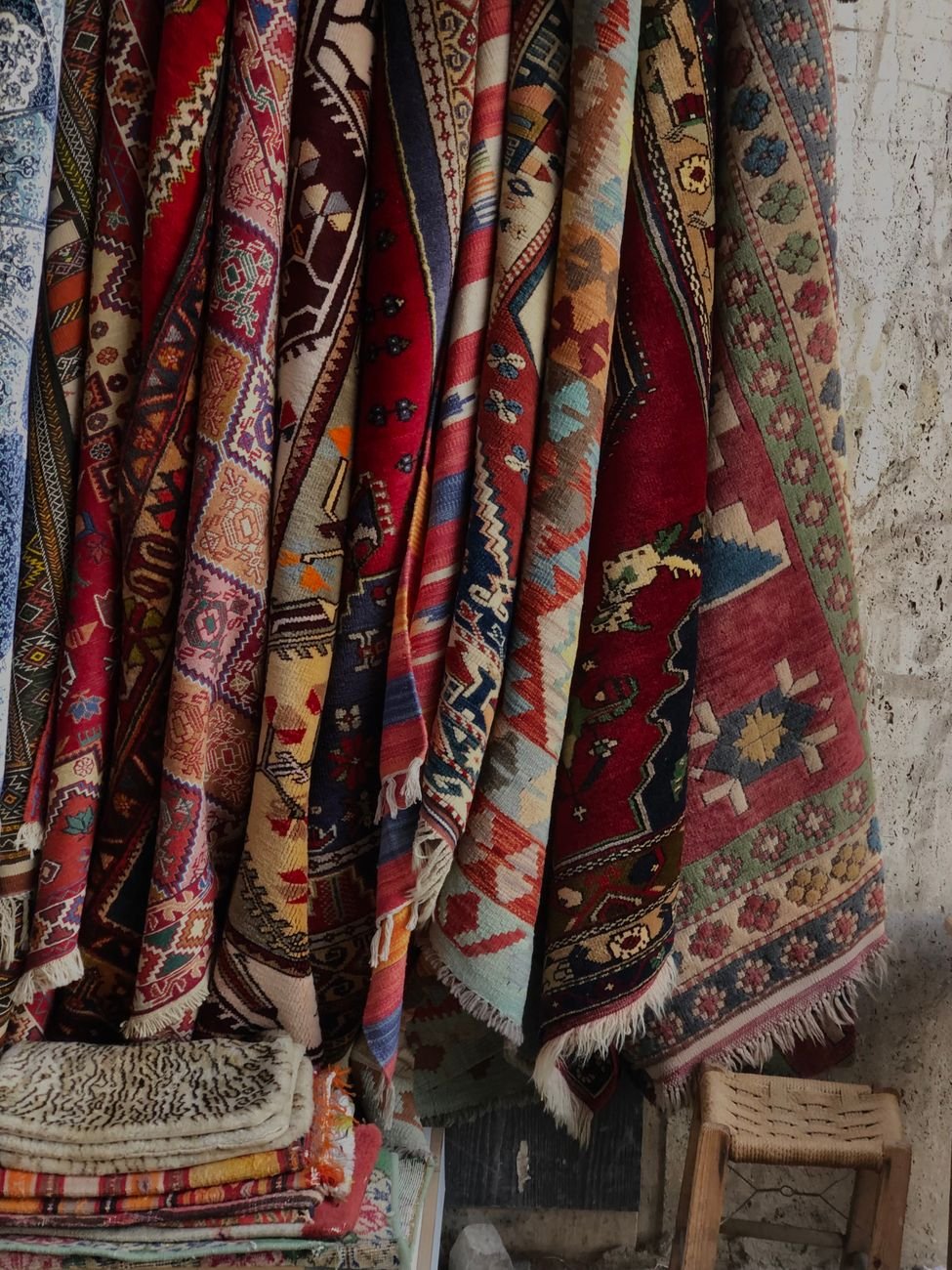
A room with one beautiful antique rug feels considered. A room with two or three, thoughtfully combined, feels collected over time. That distinction matters. If you are learning how to mix antique rugs, the goal is not to make every piece match. It is to create a conversation between them – one that feels natural, balanced, and quietly rich.
Antique rugs bring age, irregularity, and visual memory into a space. Those qualities are exactly what make them compelling, and exactly why mixing them can feel intimidating. The answer is not rigid coordination. It is understanding which differences add depth and which ones create noise.
How to Mix Antique Rugs Without Overmatching
The easiest mistake is treating antique rugs like a matching set. In beautifully layered interiors, rugs rarely repeat one another exactly. Instead, they share a mood. That might come through softened reds, a family of warm neutrals, a common patina, or a similar sense of openness in the pattern.
Start there. Before comparing motifs or regions, ask what emotional tone each rug brings to the room. An airy Oushak with pale ground colors creates a very different atmosphere than a densely ornamented Persian with saturated jewel tones. Both can work together, but usually only when one plays the lead and the other supports it.
This is why mixing antique rugs is often less about finding twins and more about establishing hierarchy. One rug should anchor the room. The others can echo, contrast, or soften. When every piece tries to be the focal point, the room feels crowded no matter how large it is.
Begin With the Anchor Rug
In most rooms, one rug already has authority. It may be the largest piece, the most intricate, or simply the one whose palette defines the space. Let that rug guide the rest of your decisions.
In a living room, the anchor is often the main rug beneath the seating arrangement. In a bedroom, it may be the large rug that extends beyond the bed, while smaller antiques sit at the sides or foot. In a hallway sequence, the strongest runner may set the tone for adjoining spaces.
Once the anchor is clear, look for a second rug that relates to it in one of three ways. It can share color, share scale, or share age and texture. You do not need all three. In fact, if all three align too neatly, the result can feel staged rather than collected.
An antique Sultanabad with spacious floral forms, for example, pairs well with a more restrained Turkish runner if both carry softened terracotta and sand tones. A finely drawn Persian rug may work beside a simpler Anatolian piece when the palette is disciplined enough to hold them together. The common thread is restraint.
Use Color as the Thread, Not the Rulebook
Color is usually the most reliable way to connect antique rugs, but it helps to think in terms of temperature and tone rather than exact shade. A faded brick red and a muted rust can live together comfortably. So can aged indigo, denim blue, and slate. What matters is whether the colors feel as though they belong to the same atmosphere.
This is especially useful when rugs come from different regions or periods. Antique rugs rarely age in identical ways, and that is part of their appeal. Slight variation in dye softness or ground color can make a room feel more nuanced.
If one rug has strong contrast, consider pairing it with another that is lower contrast and more tonal. If one carries many colors, let the second rug pick up only one or two of them. Repetition should be subtle. You want the eye to notice harmony before it notices strategy.
Neutrals also do quiet work here. Ivory, camel, tobacco, faded walnut, and warm gray often create the bridge between rugs that would otherwise feel unrelated. In layered interiors, these softer shades keep the arrangement grounded.
Balance Pattern Scale and Density
Pattern is where many mixed-rug rooms go wrong. Not because the rugs are too different, but because they compete at the same visual volume. A dense allover pattern next to another dense allover pattern can feel restless, especially if both rugs are highly articulated.
A better approach is contrast in scale. Pair a larger, more open pattern with something finer and tighter. Let one rug offer visual breathing room. This creates rhythm across a room or from one room into the next.
The same principle applies to borders and medallions. If the main rug has a commanding central medallion, a secondary rug with a quieter field often feels more elegant than another medallion piece. If a runner has elaborate borders, a room-size rug with a gentler edge can keep the overall composition from feeling too busy.
This does not mean simple is always better. It means each rug should have a role. Some pieces command attention. Others create continuity.
Think About Texture, Age, and Finish
When people ask how to mix antique rugs, they often focus on pattern and forget texture. Yet texture is one of the strongest signals of whether a combination feels convincing. An antique rug with a low, worn pile carries itself differently from a fuller, plusher vintage piece. A handwoven flatweave introduces another cadence entirely.
These differences can be beautiful together when they feel intentional. In fact, slight shifts in texture often make a room feel more layered and less decorated in a formulaic way. But there should still be some relationship in finish. A highly distressed rug beside one that feels crisp and newly saturated may read as disconnected unless the broader room supports that tension.
Patina matters too. Antique rugs with softened abrash, gentle wear, and mellowed color tend to coexist naturally, even when the designs differ. They share a sense of time.
Let Architecture Guide Placement
Mixing rugs successfully is not only about which pieces you choose. It is also about where they sit in relation to one another. Rugs viewed side by side need a different kind of harmony than rugs glimpsed from room to room.
In open-plan spaces, adjacent rugs should feel clearly related. This usually means shared palette, similar softness of color, or a consistent level of visual intensity. In more traditional homes, where rugs are seen through doorways and transitions, you can allow for greater contrast. The architecture gives each piece its own frame.
Scale is equally important. A small antique rug floating in a large room can feel incidental no matter how beautiful it is. If you are layering a smaller antique over a larger neutral foundation, make sure the antique still has enough presence to hold the furniture grouping or define the moment. In hallways, runners should feel proportionate to the corridor, not simply chosen because they were available.
Mixing Antique Rugs Room by Room
In living rooms, the most convincing combinations usually involve one room-size foundation and one or two secondary pieces. That could mean a large antique rug under the main seating area with a smaller rug near a reading corner, or a softly patterned foundation layered with a more collectible piece where you want added focus.
In bedrooms, antique rugs are often at their best when they bring warmth and asymmetry. A larger rug under the bed can be complemented by mismatched bedside runners or a small worn rug at the foot. This tends to feel more relaxed than forcing a pair.
Dining rooms require more discipline. If the dining rug is already visually assertive, nearby antique rugs should usually be quieter. Chairs, table legs, and movement create enough activity on their own.
Hallways and transitional spaces offer the greatest freedom. Here, variation can feel especially appealing, provided there is a common undertone. A sequence of runners in related earth tones can make a home feel thoughtful and deeply personal.
When Contrast Works Best
Sometimes the most memorable rooms are not the most coordinated. A spare interior may benefit from one richly detailed antique rug that interrupts the calm. A pale room may come alive with a darker, more saturated runner in the adjacent hall. Contrast can sharpen the character of a space.
The key is control. If you introduce a rug that deliberately breaks the palette or pattern language, repeat that decision somewhere else in a small way – through wood tone, textile color, or another accent. That helps the contrast feel designed rather than accidental.
For collectors and design professionals, this is often where the pleasure lies. Antique rugs do not need to be domesticated into sameness. They can keep their distinct regional identities and still sit together beautifully.
A More Natural Way to Collect
The best mixed-rug interiors rarely look assembled all at once. They feel edited, adjusted, and lived with. If two antique rugs are individually beautiful but uneasy together, trust that instinct. Not every pairing needs to work. The right combination usually reveals itself through proportion, palette, and a shared sense of age rather than strict coordination.
At Eskici Rugs, that editorial way of seeing matters. A home becomes more compelling when each rug contributes its own quiet character while supporting the whole.
If you are deciding between matching more closely or allowing a bit more contrast, err on the side of personality. Rooms with depth are usually the ones that leave a little space for tension, history, and the pleasure of pieces that were chosen because they had something to say.