
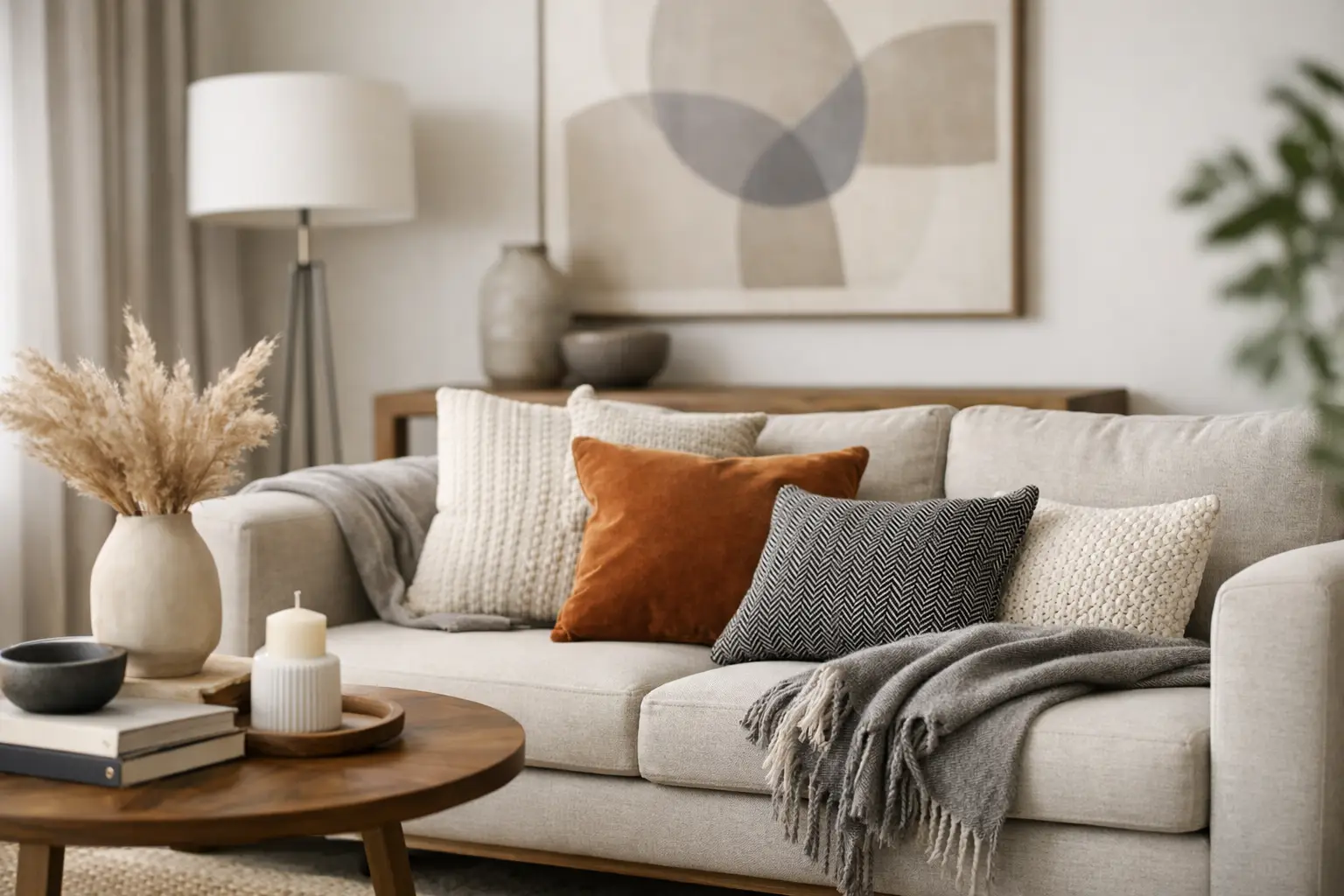
A room can have beautiful furniture, good natural light, and a sensible layout – and still feel flat. Usually, what is missing is not another statement piece. It is depth. That is where the question what is layering in interior design becomes useful, because layering is often the difference between a space that looks furnished and one that feels considered.
Layering in interior design is the practice of building a room through multiple visual and tactile elements rather than relying on a single style move. It means combining materials, tones, textiles, finishes, lighting, and objects in a way that creates warmth, contrast, and quiet complexity. A layered room does not feel crowded when it is done well. It feels settled, inviting, and complete.
This matters because the most memorable interiors are rarely designed around one loud focal point. They are composed gradually. A linen sofa sits against a softly painted wall. A vintage rug introduces age and pattern. Wood, metal, stone, and upholstery each contribute a different texture. Lighting shifts the mood by evening. Art and smaller objects give the room a personal rhythm. None of these elements need to compete, but they should speak to each other.
What is layering in interior design, really?
At its core, layering is about visual depth. In practical terms, it is how designers keep a room from feeling one-note. If every surface is smooth, every tone is similar, and every piece is new, a space can read as sterile even when the materials are expensive. Layering introduces variation.
That variation can come through texture first. Think wool against linen, aged wood beside plaster, or a hand-knotted rug under a tailored sofa. It can also come through color, especially when tones are repeated in slightly different intensities rather than matched exactly. A room with sand, oat, walnut, rust, and faded indigo will usually feel richer than one built from a single beige repeated everywhere.
Layering also depends on time. Rooms that feel layered often look as though they were assembled over years, not ordered all at once. Vintage and antique pieces are useful here because they bring irregularity, patina, and a sense of history. They soften newer interiors and give modern rooms a more grounded quality.
Why layered rooms feel more timeless
Trends tend to flatten a room because they encourage repetition. The same boucle chair, the same pale oak finish, the same sculptural lamp. There is nothing wrong with any one of those choices, but a room made entirely from trend-driven pieces often dates quickly.
A layered interior tends to hold up better because it is less literal. It mixes old and new. It balances polished surfaces with imperfect ones. It allows for restraint, which is often what makes a room feel lasting rather than styled for a moment. That is especially true in homes where comfort matters as much as appearance.
For design-conscious homeowners and decorators, layering is also what makes a room feel personal. It creates space for inherited furniture, collected textiles, books, ceramics, and art without making the room feel accidental. The goal is not to fill every corner. The goal is to let each element add something distinct.
The main elements of layering
Texture is usually the first layer people notice, even if they do not name it. A room with nubby upholstery, natural wood, worn brass, and a softly faded rug feels more dimensional than one made only of slick finishes. Texture catches light differently across the room, which creates movement without clutter.
Color is another essential layer. This does not require bold color. In fact, some of the most sophisticated rooms are built from quiet palettes. The key is tonal range. Cream, flax, camel, tobacco, olive, and charcoal can create extraordinary depth when they are varied in finish and weight.
Pattern has a role as well, though it is best handled with a light hand. In a layered room, pattern is often introduced through textiles: a rug, a stripe in a chair fabric, a small-scale print on a pillow, or the natural patterning of marble and wood grain. Pattern works best when it varies in scale. If every motif is equally busy, the room can feel restless.
Shape matters more than many people realize. A room full of square silhouettes can feel rigid. Add a round pedestal table, a curved lamp, or an arched mirror, and the composition relaxes. Layering is not just about what something is made of. It is also about how forms interact.
Lighting is another quiet but essential layer. Overhead lighting alone tends to flatten a room. Layered interiors rely on ambient, task, and accent lighting together. A table lamp near a reading chair, a shaded floor lamp in a corner, and soft wall lighting can make the same room feel dramatically more intimate by evening.
Rugs are often the foundation of a layered interior
If there is one element that can change the depth of a room immediately, it is the rug. Rugs do more than cover the floor. They anchor furniture, temper acoustics, introduce pattern, and bring texture underfoot. In layered interiors, they often act as the visual bridge between architecture and furnishings.
This is why handmade vintage and antique rugs are so effective. They carry nuanced color, subtle variation, and a lived-in softness that newer machine-made options rarely replicate. A faded Oushak in a living room can bring warmth to crisp upholstery. A Persian rug can introduce detail and structure to a quieter space. A Sultanabad can hold a larger room together without feeling heavy. These pieces do not need to dominate. Often their strength is in the way they settle a room.
Layering with rugs can also be literal. In some spaces, especially large bedrooms, sitting rooms, or informal family areas, a smaller vintage rug over a larger natural fiber base can add scale and softness. But this approach depends on the room. It works best when the proportions are intentional and the top rug has enough character to justify the extra layer.
How to layer a room without overdoing it
The common misunderstanding is that layering means adding more. More pillows, more objects, more decor. In reality, good layering is selective. It asks whether each piece contributes contrast, warmth, or balance.
Start with the largest elements. Consider the architecture, flooring, wall color, and main upholstered pieces. Then introduce one layer at a time. A rug may bring the first sense of pattern and age. Window treatments soften hard lines. Accent lighting adds atmosphere. Smaller textiles and objects come later.
It also helps to vary visual weight. If the sofa is substantial and low, perhaps the coffee table is lighter or more open. If the rug is patterned, maybe the upholstery stays quieter. If the art is bold, the surrounding accessories can be restrained. A layered room needs tension, but it also needs places for the eye to rest.
Negative space is part of layering too. Leaving some surfaces clear allows the materials and pieces you do choose to register more clearly. This is often what separates a collected room from a crowded one.
The trade-offs to keep in mind
Layering is not one-size-fits-all. A minimalist interior can still be layered, but the expression will be more restrained. The depth may come from plaster walls, oak floors, a sculptural chair, and a quiet antique rug rather than from many accessories. In a more traditional room, layering may be richer and more decorative.
There are practical considerations as well. Heavily layered rooms can require more maintenance, especially when they include delicate textiles, antiques, or many styled surfaces. In high-traffic family homes, durability matters. That may mean choosing wool over silk, forgiving finishes over precious ones, and pieces that improve with wear rather than suffer from it.
Budget is another factor. Layering does not require buying everything at once. In fact, it is usually better when you do not. A room built gradually often has more integrity because each addition has been considered. This is one reason curated, one-of-a-kind pieces are so valuable. They bring distinction without requiring excess.
A more thoughtful way to decorate
When people ask what is layering in interior design, they are often really asking why some homes feel calm, warm, and complete while others feel unfinished. The answer is rarely a single product. It is the relationship between elements – texture beside texture, old beside new, softness beside structure.
Beautifully layered interiors are not loud about their effort. They feel natural, even when they are carefully composed. If you begin with materials that have depth, choose pieces with quiet character, and allow the room to evolve, the result is usually more timeless than anything assembled in a rush. For many spaces, that process starts from the ground up, with a rug that gives the room something real to build on.