
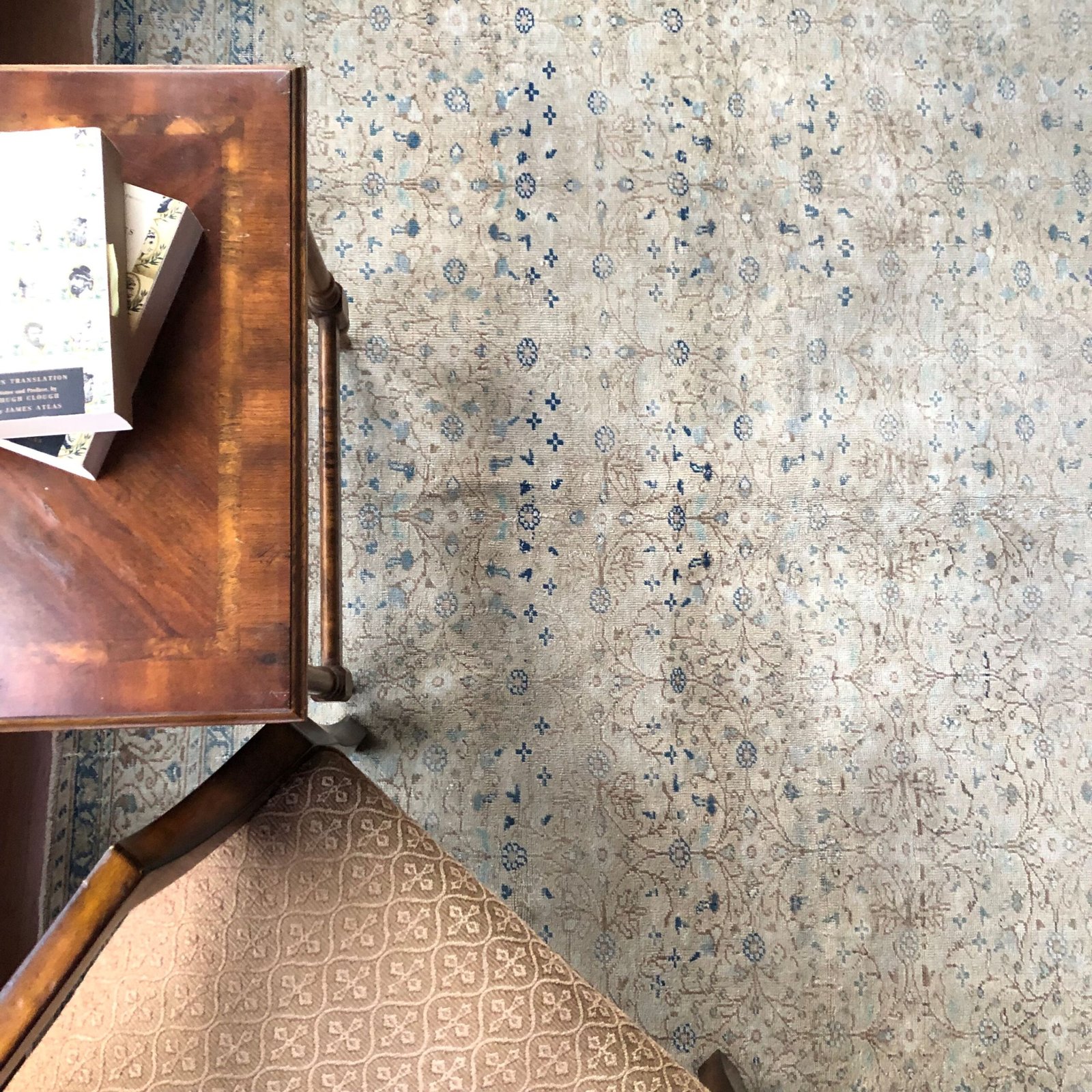
Everything you need to know about vintage rug care — cleaning methods, storage, repairs, and common mistakes to avoid.
Vintage rugs are investments in both beauty and craftsmanship. With proper care, these pieces can continue to enhance spaces for decades while maintaining their structural integrity and aesthetic appeal. This vintage rug care guide provides evidence-based care practices that protect your investment while allowing you to enjoy your rug in everyday living.
Vintage Rug Care: Daily & Weekly Maintenance
Regular Vacuuming
Frequency: Every few days to weekly, depending on foot traffic
Proper Technique:
- Vacuum the backside first to shake loose deeply embedded dust and debris
- Clean up any debris from the floor
- Flip and vacuum the front side
- Vacuum the backside every few months
- Use moderate suction to avoid damaging delicate fibers
Pro Tip: Weekly vacuuming of both sides removes dust and debris that can damage delicate fibers over time
Rotation for Even Wear
Rotate the direction of your rug regularly to ensure even wear patterns, especially in high-traffic areas. This simple step prevents certain areas from becoming more worn than others.
Vintage Rug Care: Placement Considerations
Optimal Positioning
- Avoid direct sunlight: Direct sunlight can cause color fading
- Consider traffic patterns: Avoid placing rugs in the highest-traffic areas when possible
- Use rug pads: Quality rug pads prevent slipping and reduce wear from friction against floors
Environmental Factors
Control humidity and temperature when storing or displaying vintage rugs to prevent fiber damage and maintain structural integrity.
Vintage Rug Care: Spot Cleaning & Stain Management
Immediate Response Protocol
Get stains while they’re wet – once a stain dries, it’s much more difficult to remove
Step-by-Step Spot Cleaning:
- Blot, don’t rub: Use clean, white cloths to absorb liquid without pushing it deeper
- Work from outside in: Prevent the stain from spreading
- Test first: Always test cleaning solutions on an inconspicuous area
- Use minimal moisture: Excessive water can damage backing and cause shrinkage
- Dry thoroughly: Ensure complete drying to prevent mold and mildew
Safe Cleaning Solutions
- Mild dish soap solution: Mix small amount with cool water
- Club soda: Effective for fresh spills
- Professional spot cleaners: Choose products specifically designed for natural fibers
Vintage Rug Care: Professional Cleaning Schedule
Frequency Guidelines
- General recommendation: Professional cleaning every five years
- High-traffic or pet households: Deep cleaning every 12 to 18 months
- Low-traffic areas: Every 5-7 years may be sufficient
Choosing Professional Services
Professional cleaning should be done by someone that specializes in antique rugs – this is an art in itself
What to Look For:
- Specialization in vintage/antique rug cleaning
- Temperature-controlled drying facilities
- Experience with your rug’s specific fiber type and weave
- References and portfolio of similar work
- Detailed assessment and documentation process
When to Seek Professional Help
Immediate Professional Attention Needed:
- Large or set-in stains
- Water damage or flooding
- Moth damage or other pest issues
- Fraying edges or loose threads
- Color bleeding or dye transfer
- Strong odors that don’t resolve with airing
Restoration vs. Cleaning
Some issues require restoration specialists rather than cleaning services. Structural damage, significant moth damage, or color restoration should be handled by certified rug restoration professionals.
Long-Term Preservation
Storage Best Practices
When storing vintage rugs:
- Control humidity and temperature
- Roll rather than fold when possible
- Use acid-free tissue paper between folds if rolling isn’t feasible
- Store in breathable materials, not plastic
- Check periodically for pest activity
Value Protection
Proper care and maintenance is crucial to preserving beauty, value, and structural integrity. Document your rug’s condition with photos and maintain records of professional cleanings and any treatments.
Red Flags: What NOT to do
Cleaning Don’ts
- Never use harsh chemicals or household cleaners not designed for natural fibers
- Don’t oversaturate – excessive moisture can cause shrinkage, dye bleeding, or mold
- Avoid steam cleaning unless specifically recommended by a professional
- Don’t ignore stains – the longer they sit, the harder they become to remove
- Never place wet rugs in direct heat for drying
Handling Precautions
- Don’t drag or pull rugs across surfaces
- Lift rather than slide when moving
- Avoid wearing shoes with heels or cleats on valuable rugs
Conclusion
Vintage rugs represent a perfect marriage of durability and beauty. By following these professional care guidelines, both designers and clients can confidently enjoy these pieces in active living spaces while preserving their investment for future generations.
The key is consistency in basic maintenance, prompt attention to issues, and knowing when to call in professionals. With proper care, vintage rugs don’t just survive daily life – they enhance it with their timeless character and proven resilience.
This guide is provided as an educational resource. For specific concerns about valuable or antique pieces, always consult with certified rug care professionals.
Caring for a vintage rug starts with choosing the right one.
At Eskici Rugs we hand-select every piece for structural integrity, natural dyes, and the kind of quiet beauty that improves with age — so the care you give it is genuinely worth it.